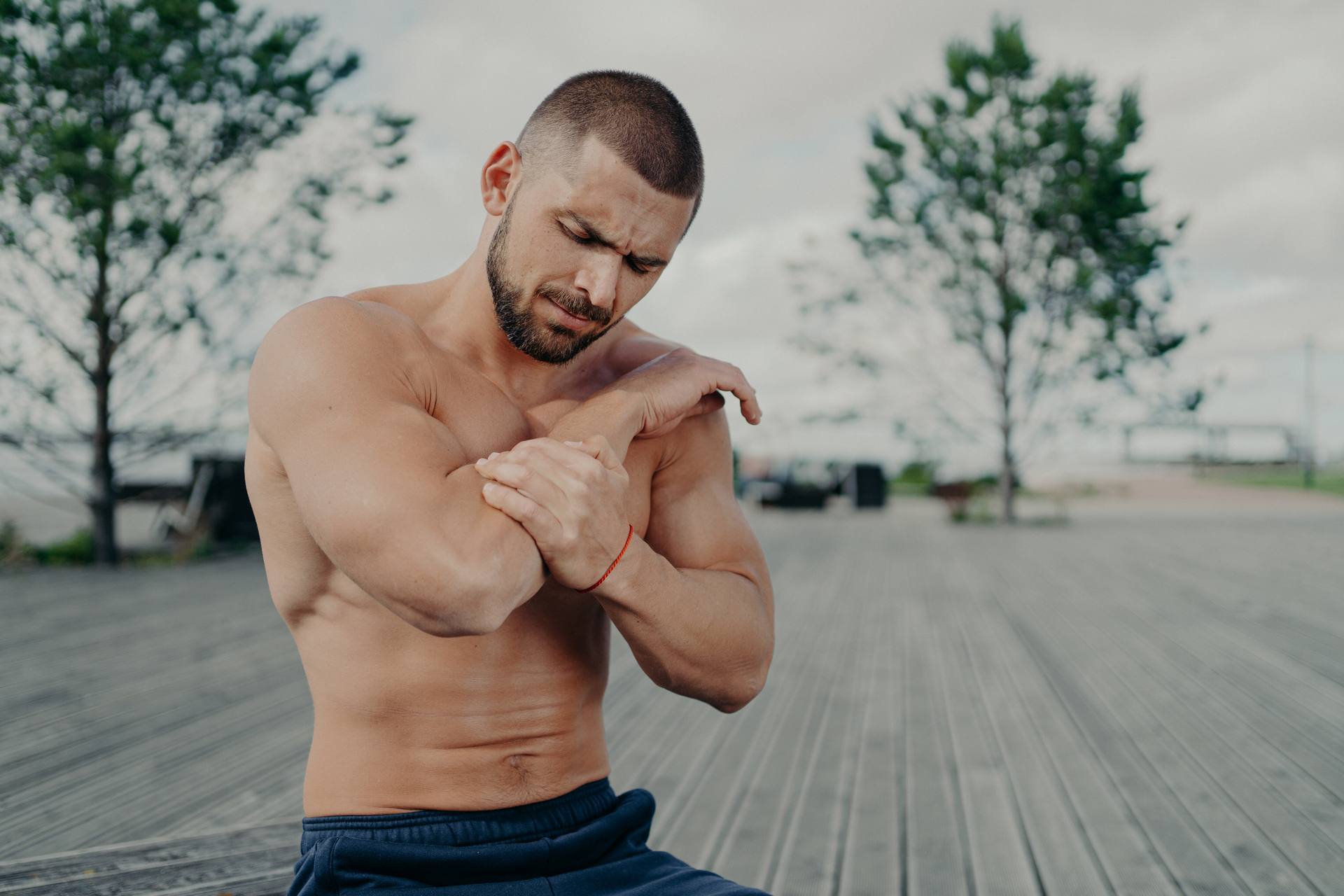
The short answer. Tendinitis is inflammation or irritation of a tendon, the fibrous cord that joins muscle to bone, and it usually follows overuse or repetitive strain1,2. In many cases wear inside the tendon (tendinosis) is present too, and doctors also use the broader term tendinopathy1,3. Exercise that gradually loads the tendon is a core treatment2,4, and cortisone shots can ease pain in the short term5. Platelet-rich plasma (PRP) injections are another option, and in tennis elbow studies patients treated with PRP had better long-term pain relief and function than patients given cortisone6.
Tendons are the fibrous structures that join muscles to bones. When a tendon becomes swollen or inflamed, it is called tendinitis, and in many cases tendinosis (tendon degeneration) is also present1. It can follow an injury or overuse, and playing sports is a common cause. It can also develop with age as tendons lose elasticity, or with body-wide diseases such as rheumatoid arthritis and diabetes1. Cleveland Clinic adds that certain medications, including statins and fluoroquinolone antibiotics, can cause it, and that after age 40 tendons tolerate less stress and tear more easily2.
The three words are used for overlapping problems:
The shift in language has a history. A 2002 BMJ editorial titled "Time to abandon the 'tendinitis' myth" argued that painful overuse tendon conditions have a non-inflammatory pathology7. Later work pushed back: a 2014 review argued that inflammation is a key component of chronic tendinopathy8, and a 2021 expert review lists disorganized collagen fibers, more small blood vessels and nerve fibers, and increased immune cells and inflammatory mediators among its features9. Researchers have also proposed that tendon pathology is a continuum, as a way to explain why people of different ages and activity levels show such different degrees of pain and function, and to help match treatments to the stage of the problem10.
MedlinePlus lists the main symptoms as1:
The skin over an inflamed tendon may be warm and red1. Some people also notice stiff joints or a cracking or popping sensation when they move2.
The most common overuse tendinopathies involve the rotator cuff, the inner and outer elbow, the patellar tendon below the kneecap, the gluteal tendons, and the Achilles tendon9.
First-line care usually means resting the tendon (sometimes with a splint or brace), heat or cold, over-the-counter pain relievers, and physical therapy to stretch and strengthen the muscle and tendon1. For Achilles tendinitis, AAOS notes that anti-inflammatory drugs can ease pain enough to allow physical therapy exercises3. Cleveland Clinic advises that if symptoms do not improve in about three weeks, a provider may offer further treatment, and that gradual loading of the tendon is essential to restoring function2.
Exercise that loads the tendon. In a randomized trial of 58 people with chronic Achilles tendinopathy, one group did 12 weeks of eccentric (lowering) exercise and the other did heavy slow resistance training. Both groups improved significantly in symptoms and function, the improvements held at one year, and tendon thickness went down. Training compliance was higher with the heavy slow program (92% versus 78%)4. A 2023 meta-analysis of 110 studies and 3,953 participants found larger average benefits from programs that added external weight and were done less often than daily15.
For tennis elbow, a trial of 198 people tested eight sessions of physiotherapy combining elbow manipulation and exercise. It gave better results than a wait-and-see approach in the first six weeks and better results than cortisone injections after six weeks, and people who had physiotherapy sought less additional treatment, such as anti-inflammatory drugs16.
Cortisone shots. A review of 41 randomized trials found that corticosteroid injections reduced tendon pain in the short term compared with other treatments5. There are risks to weigh at some sites. Injected into the Achilles tendon, cortisone can cause the tendon to rupture3. For tennis elbow, AAOS advises using it very sparingly, because excessive use can weaken the lateral epicondyle, the spot on the outside of the elbow where the tendon attaches14.
PRP (platelet-rich plasma). AAOS describes PRP as a biological treatment designed to improve the biologic environment of the tissue. A small sample of blood is taken from the arm and spun in a centrifuge to separate out the platelets, which are known for their high concentration of growth factors, and these are injected into the affected area14. A 2023 review of 33 randomized trials with 2,025 patients found that patients with tendon problems tended to have less pain and better function after ultrasound-guided PRP injections than before them17.
What studies have found for each tendon:
| Tendon | What studies found with PRP |
|---|---|
| Tennis elbow | In a 2024 meta-analysis of 11 randomized trials and 730 patients, PRP gave better long-term (6 months or more) pain relief and function than cortisone [6]. AAOS says some studies have shown promising results [14]. |
| Rotator cuff | In a 2026 meta-analysis of 10 randomized trials and 591 patients, PRP gave better shoulder scores and less pain than cortisone at 6 months, with fewer adverse events [18]. |
| Patellar tendon (jumper's knee) | In a 2022 review of 8 comparative studies, PRP gave better pain relief and function than shock wave therapy in the medium and long term [19]. |
| Achilles | AAOS says several studies of PRP injections for Achilles tendinitis have shown improvements in pain [3]. |
The authors of the 2024 tennis elbow review concluded that both PRP and cortisone are effective treatments, and that PRP provides better long-term function and long-term pain relief6. A 2016 network meta-analysis of injection treatments for tennis elbow also concluded that PRP can be considered a treatment candidate for the condition20. For the rotator cuff, the 2026 review's authors concluded that PRP may be a more durable treatment option for rotator cuff tendinopathy18.
At our practice, physical therapy comes first. PRP and other orthobiologic treatments may be considered when it has not worked. Not every patient is a candidate, and candidacy is decided at a consultation before any financial commitment.
Surgery. Surgery is rarely needed1,2. AAOS suggests considering it for tennis elbow when symptoms continue after 6 to 12 months of nonsurgical care14, and for Achilles tendinitis only after 6 months of nonsurgical treatment3.
It depends on the tendon and how long the problem has been present. Cleveland Clinic estimates two to three weeks to heal after treatment, or a few months for a severe case2. For Achilles tendinitis, AAOS notes it may take a few months for symptoms to improve significantly, and pain may last longer than three months3. Rotator cuff tendinitis may take several weeks to months to recover completely13. For tennis elbow, about 80 to 95% of patients have success with nonsurgical treatment14.
Tendinitis can come back. If overuse caused it, a change in work habits may be needed to prevent a return1, and putting too much stress on the tendon again can bring it back2.
MedlinePlus advises contacting a provider if symptoms of tendinitis occur1. Cleveland Clinic advises prompt care for fever over 100 degrees Fahrenheit, swelling with redness and warmth, or inability to move the affected area, since these can signal another condition2. A sudden pop in the back of the calf or heel may mean a torn Achilles tendon, and AAOS advises seeing a doctor immediately3.
If you are in the Santa Barbara area, Dr. Scheinberg can examine the tendon, review any imaging and talk through the options. See sports injury treatment or call (805) 682-1394.
Short answers to the questions patients ask most.
Have a question about your own situation?
Call (805) 682-1394Reviewed by Dr. Richard Scheinberg, MD, a board-certified orthopedic surgeon in Santa Barbara with 40 years of surgical experience.