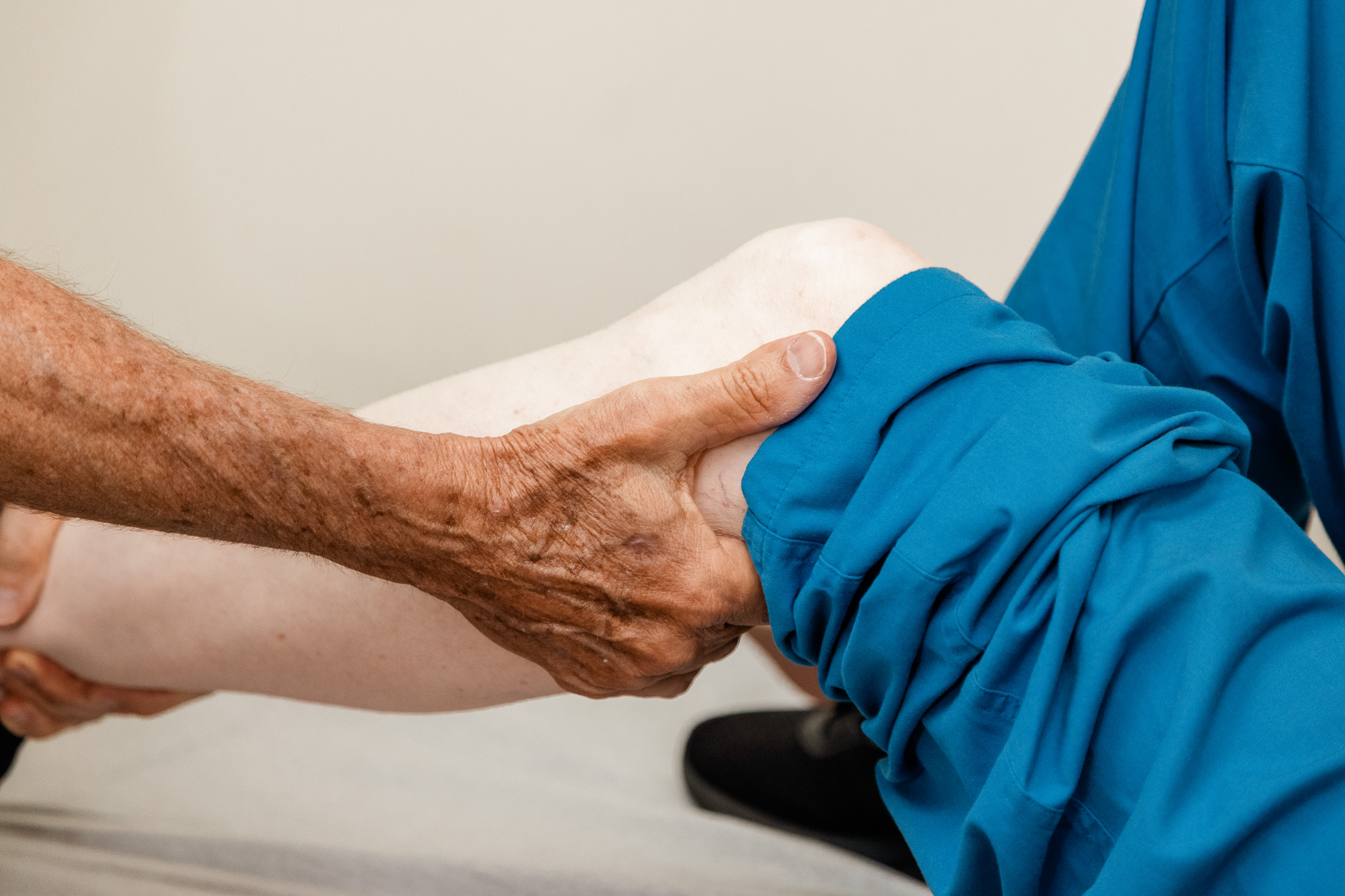
The short answer. For osteoarthritis of the knee, hip or shoulder, treatment starts without surgery. Exercise and physical therapy, weight loss for people who are overweight, and anti-inflammatory medicines have strong guideline support, with cortisone injections for shorter-term relief1,2,3. Platelet-rich plasma (PRP) and bone marrow aspirate concentrate (BMAC) are injections prepared from your own blood or bone marrow, and studies have found that patients' pain and function improved after treatment4,5,6. Surgery, usually a joint replacement, becomes the better option when pain disables you and non-surgical care has stopped helping7,8.
Osteoarthritis is the most common form of arthritis. The smooth cartilage that covers the ends of the bones gradually wears away, leaving a frayed, rough surface, and moving the joint becomes painful9. It develops slowly and most often appears in middle and older age. Obesity, an earlier injury to the joint and a family history of osteoarthritis all raise the risk9.
Typical signs include a dull ache that builds over time and is often worse in the morning, stiffness and swelling, creaking or grinding with movement, and a knee that may buckle and give way9. There is no cure. Early treatment can still help keep the joint moving, relieve pain and improve function9.
Two major guidelines grade the research. The American Academy of Orthopaedic Surgeons (AAOS) knee guideline, adopted in 2021, rates each recommendation by the quality and consistency of the studies behind it2. The 2019 guideline from the American College of Rheumatology and the Arthritis Foundation (ACR) covers the knee, hip and hand1. Here is how the two rate the everyday first steps.
| Treatment | AAOS 2021 (knee) | ACR 2019 (knee and hip) |
|---|---|---|
| Exercise or physical therapy | Strong, for [2] | Strong, for [1] |
| Weight loss, if overweight | Moderate, for [2] | Strong, for [1] |
| Anti-inflammatory gel (topical NSAID) | Strong, for [2] | Strong, for (knee) [1] |
| Anti-inflammatory pills (oral NSAIDs) | Strong, for [2] | Strong, for [1] |
| Cane | Moderate, for [2] | Strong, for, when walking or stability is affected [1] |
| Knee brace | Moderate, for [2] | Strong, for, when walking or stability is affected [1] |
| Cortisone injection | Moderate: short-term relief [2] | Strong, for [1] |
A few points stand out. Exercise and anti-inflammatory pills are rated strongly by both groups2,1, although OrthoInfo cautions that NSAIDs should be used carefully, or avoided, by people with coronary artery disease, heart failure or chronic kidney disease10. For weight, ACR notes that losing 5% or more of body weight can bring measurable change, and that clinically important benefits keep increasing with greater weight loss1.
Cortisone is rated well by both, but AAOS describes the relief as short-term2. OrthoInfo adds that frequent repeated injections, or injections over a long period, can increase joint damage rather than decrease it10. For the hip, ACR strongly recommends imaging guidance, such as ultrasound, when injecting the joint1.
OrthoInfo lists rest or a change in how you use the arm, physical therapy, anti-inflammatory medicines, and heat or ice as first steps. Cortisone injections can dramatically reduce pain and inflammation there, though the effect is often temporary3. A 2023 review of non-surgical shoulder care recommends rotator cuff strengthening exercises to protect the joint11. The same review notes that biologics such as PRP, BMAC and mesenchymal stem cells have drawn growing attention, with good clinical outcomes reported and these options helping to decrease shoulder pain11.
PRP is made from your own blood. Platelets are best known for helping blood clot, but they also contain hundreds of proteins called growth factors that are very important in the healing of injuries6. The blood is spun in a centrifuge so the platelets are 5 to 10 times more concentrated than usual, then injected into the joint6. Laboratory studies have shown that this higher concentration of growth factors may speed up the healing process6.
For the knee, several lines of research found that patients improved.
For the hip, a 2023 review of eight studies and 331 patients found that PRP reduced pain compared with before treatment at several points in follow-up, with the greatest effect at one to two months, and there were no lasting adverse effects12. A single PRP injection gave a larger reduction in hip pain than multiple injections12.
Bone marrow aspirate concentrate (BMAC) is a concentrate of your own bone marrow. Marrow is a source of mesenchymal stem cells, along with growth factors and cytokines that may aid in reducing inflammation and in tissue repair13. The stem cells make up only a small fraction (about 0.001%) of the marrow's nucleated cells, which is why the marrow is concentrated13. At our practice, BMAC is performed at Pueblo Surgery Center, where the marrow is drawn, processed and delivered in one visit, with light anesthesia so there is no discomfort during the harvest.
What the studies have found:
At our practice, physical therapy and viscosupplementation come first in the order of care. Viscosupplementation is an injection of hyaluronic acid, and in the AAOS review, patients who received it improved at six months2. PRP, BMAC or the two combined may be considered when those first steps have not worked. See joint preservation and all treatments.
For the knee, AAOS OrthoInfo lists the signs that point toward a total knee replacement: severe pain or stiffness that limits walking, climbing stairs or getting out of a chair; moderate or severe pain while resting; swelling that does not improve with rest or medicine; a knee that bows in or out; and failure to substantially improve with other treatments such as anti-inflammatory medicines, cortisone or lubricating injections, and physical therapy7. Recommendations for surgery are based on pain and disability, not age7. OrthoInfo reports that more than 90% of modern knee replacements are still functioning well 15 years after surgery7.
For the hip and the shoulder, OrthoInfo gives the same general rule: surgery may be recommended when arthritis pain causes disability and is not relieved by non-surgical treatment8,3.
The PRP research is strongest for mild to moderate knee arthritis. OrthoInfo describes growing evidence for PRP in low- to moderate-grade knee osteoarthritis6, and AAOS found PRP given as three injections more likely to show benefit in knees graded II and III on the Kellgren-Lawrence X-ray scale2. X-rays show how far the joint has narrowed and whether there are bone spurs9.
Not every patient is a candidate, and a proper orthopedic evaluation is essential. Candidacy is decided at a consultation, before any financial commitment. If you live outside the area, the first consultation and follow-ups can be done by telemedicine, with imaging sent by email.
If you are in the Santa Barbara area, Dr. Scheinberg can examine the joint, review any imaging and talk through the options. See knee conditions or hip and pelvis, or call (805) 682-1394.
Short answers to the questions patients ask most.
Have a question about your own situation?
Call (805) 682-1394Studies have found that patients improved. A 2025 meta-analysis of 18 randomized trials found clinically relevant improvement in function out to 12 months and in pain at three and six months4. In the AAOS review, patients who had PRP kept their improvement at 9 to 12 months, comparing favorably with hyaluronic acid2, and OrthoInfo notes that some studies have shown results lasting up to two years6.
Studies have found that patients improved. In a 2024 review of eight randomized trials, patients treated with BMAC improved from one month after the injection, and their pain scores at 6 and 12 months compared favorably with hyaluronic acid5. A 2022 review of eight studies (299 knees) found BMAC effective in improving pain and patient-reported outcomes at short- to mid-term follow-up14.
Reviewed by Dr. Richard Scheinberg, MD, a board-certified orthopedic surgeon in Santa Barbara with 40 years of surgical experience.