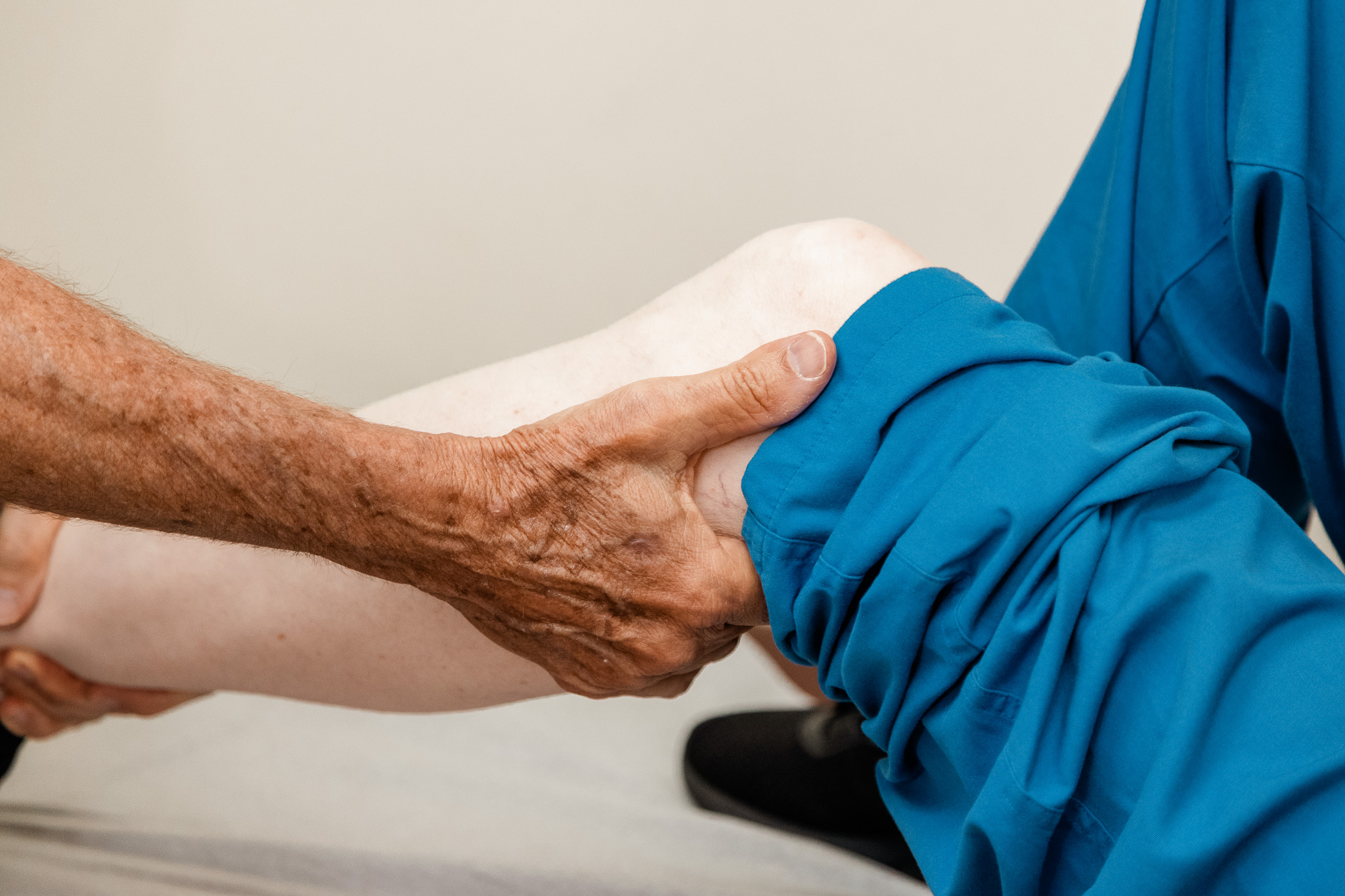
The short answer. Cortisone and platelet-rich plasma (PRP) are both injected into painful joints and tendons, but they work in different ways. Cortisone calms inflammation and usually starts working within about a week1,2. PRP is a concentrate of your own platelets, and it can take several weeks before you notice a benefit3. In trials that compare the two head to head, cortisone tends to do as well or better in the first month, while PRP has often come out ahead at three to six months4,5,6,7. The answer depends on the condition.
Cortisone is a corticosteroid, a manufactured drug that closely resembles cortisol, a hormone your adrenal glands make. It temporarily turns down the immune system's activity in the area where it is injected, which reduces pain and inflammation1. The shot can go into a joint, a bursa (a fluid-filled cushion near a joint) or the area next to a tendon, and it is usually given together with a local anesthetic2.
Providers use cortisone for arthritis, tendinitis, bursitis, tennis elbow, carpal tunnel syndrome and trigger finger, among other conditions1. Some people need only one shot after a temporary injury, while others with a long-term condition need repeat injections1.
Blood is mostly liquid plasma, with red cells, white cells and platelets suspended in it. Platelets are best known for clotting, but they also contain hundreds of proteins called growth factors that are important in healing3. PRP is plasma with a platelet concentration 5 to 10 times higher than normal blood. To make it, blood is drawn and spun in a centrifuge to separate and concentrate the platelets, which are then injected into the injured area3.
The American Academy of Orthopaedic Surgeons (AAOS) is candid that it is not exactly clear how PRP works; laboratory studies suggest the higher concentration of growth factors may speed healing3. Results can depend on the area treated, your overall health, whether the problem is new or long-standing, and how the PRP was prepared3.
Cortisone. The local anesthetic mixed into the shot can ease pain for the first few hours. When it wears off, the old pain may come back for several days, and the steroid itself usually starts working 5 to 7 days after the injection2. Cleveland Clinic advises calling your provider if you do not feel better after 10 days1. Relief usually lasts from a few weeks to a few months, and with a long-term condition, symptoms can gradually return1.
PRP. Pain at the injection site may actually increase for the first week or two, and it may be several weeks before you feel a benefit3. For mild to moderate knee osteoarthritis, some studies have shown results lasting up to two years3.
Research on cortisone fits that timing. A review of 41 randomized trials of tendon injections found that cortisone reduced pain in the short term compared with other treatments8.
AAOS notes that more and more research shows PRP is effective for mild to moderate knee osteoarthritis3. In trials that compared it with cortisone, PRP has done better after the first few months. A 2021 meta-analysis of eight studies and 648 patients found PRP was better than cortisone at reducing pain and stiffness and improving function at 3, 6 and 9 months. Three PRP injections given about a week apart did better than a single injection over 12 months4. A 2025 network meta-analysis of 37 randomized trials, all with at least a year of follow-up, ranked PRP combined with hyaluronic acid first and PRP alone second for pain and function at one year9.
At our practice, physical therapy and viscosupplementation come before orthobiologics such as PRP in the order of care. See knee conditions for how that works in practice.
Outside the knee, the pooled trials show a similar shape: cortisone tends to match or beat PRP early, and PRP tends to lead later.
| Condition | Trials pooled | What the review found |
|---|---|---|
| Tennis elbow (lateral epicondylitis) | 13 randomized studies | Cortisone ahead at 1 month; PRP ahead at 3 and 6 months [5] |
| Plantar fasciitis (heel pain) | 24 randomized trials, 1,653 people | Cortisone similar at 1 month; PRP better for pain at 3 and 6 months, and for foot function at 3, 6 and 12 months [6] |
| Rotator cuff tendinopathy or partial tears | 10 randomized trials, 591 people | Cortisone similar at 3 to 6 weeks and 3 months; PRP modestly better for pain and function at 6 months [7] |
Tennis elbow. In a double-blind trial of 100 patients, 73% of the PRP group and 49% of the cortisone group met the definition of success at one year, based on pain scores. The cortisone group did better at first, while the PRP group kept improving10. At two years, arm function in the PRP group had improved significantly11. A second meta-analysis, of 11 randomized trials and 730 patients, found the same split: cortisone better in the first two months, PRP better at six months and beyond12.
Plantar fasciitis. A separate 2025 review of 13 trials and 901 people found better pain scores with PRP in the medium term13.
Shoulder. In the 2026 review of 10 trials, PRP showed clearer benefits at six months, with better shoulder function and pain scores than cortisone, and it was associated with fewer adverse events7. The authors suggested PRP may be a more durable option for rotator cuff tendinopathy7.
This is a real reason to think carefully about repeat steroid injections into the knee.
A 2019 review in *Radiology* described four adverse joint findings seen in hips and knees after steroid injections: faster progression of osteoarthritis, subchondral insufficiency fracture (a fracture in the bone just beneath the cartilage), complications of osteonecrosis, and rapid joint destruction including bone loss. The authors said more research is needed to identify which patients are at risk14.
Cleveland Clinic advises waiting at least three months between shots and says most people should not have more than three in a year. People who receive many rounds may also have a higher risk of osteoporosis1. Tendon rupture is possible but uncommon: in trials that reported side effects, 1 of 991 people who received cortisone (0.1%) had a tendon rupture8.
Cortisone. The most common side effects are pain at the injection site, a temporary increase in swelling, bruising, a short-term rise in blood sugar, and redness, discoloration or lightening of the skin where the needle went in1. People with diabetes should check their blood sugar more often for about five days afterward1. Rarely, the shot can cause infection, high blood pressure or fluid retention1, and MedlinePlus also lists allergic reaction, bleeding into the joint or tendon, and nerve damage2.
PRP. AAOS describes the risks as minimal. The main one is increased pain at the injection site. The rates of infection, tissue damage and nerve injury appear similar to those of cortisone injections3.
A large review of side effects after knee injections pooled 559 studies covering 76,061 patients. It found at least one side effect in 11.0% of people after cortisone and 8.7% after PRP, with severe side effects in 1.1% and 0.3%15.
PRP is usually paid out of pocket. AAOS notes that few insurance plans provide even partial reimbursement3, and a 2024 national study states that PRP is typically not covered by insurance16.
National figures (these are not our practice's prices):
We did not find a published national price for a cortisone shot, so none is quoted here. Coverage for either injection depends on your plan.
Not every patient is a candidate for orthobiologics, and a proper orthopedic evaluation is essential before choosing either injection. Learn more about PRP at our practice.
If you are in the Santa Barbara area, Dr. Scheinberg can examine the joint, review any imaging and talk through which option fits your situation. Call (805) 682-1394.
Short answers to the questions patients ask most.
Have a question about your own situation?
Call (805) 682-1394It depends on the condition and the time frame. In pooled trials, cortisone tends to match or beat PRP in the first month, and PRP has often done better at three to six months4,5,6,7. In one double-blind tennis elbow trial, 73% of the PRP group and 49% of the cortisone group met the definition of success at one year10.
It may be several weeks before you feel a benefit, and the injection site can be more sore for the first week or two3.
Cleveland Clinic advises waiting at least three months between shots and says most people should not have more than three in a year1.
Reviewed by Dr. Richard Scheinberg, MD, a board-certified orthopedic surgeon in Santa Barbara with 40 years of surgical experience.