The short answer. Treatment starts with a consultation, not an injection. An orthopedic evaluation decides whether you are a candidate, and that happens before any financial commitment. PRP is made from your own blood and injected in a visit that commonly takes about an hour1, while BMAC at our practice is drawn, processed and delivered in one visit at Pueblo Surgery Center under light anesthesia. Some soreness afterward is common, and initial results usually take a few weeks to appear1,2. Studies of both treatments for knee arthritis have found that patients improved in pain and function3,4.
The first visit is an orthopedic evaluation. In a typical evaluation for joint pain, the doctor talks with you about your symptoms and medical history, examines the joint, and may order tests such as X-rays; an MRI or CT scan is occasionally needed to see the bone and soft tissues5.
At our practice, a proper orthopedic evaluation is essential, and not every patient is a candidate for orthobiologics. Candidacy is decided at this consultation, before any financial commitment.
You will also talk about what you have already tried. Here, physical therapy and viscosupplementation come first. PRP, BMAC or the two combined may be considered when those have not worked.
If you live outside the area, the first consultation and follow-ups can be done by telemedicine, with your imaging sent by email.
Usually not, so it is worth asking early. The American Academy of Orthopaedic Surgeons (AAOS) advises checking eligibility with your health insurance carrier, noting that few insurance plans, including workers' compensation plans, provide even partial reimbursement for PRP2. A national study of top US orthopedic hospitals describes PRP as typically not covered by insurance6.
National figures, which are not this practice's prices:
Because candidacy is decided before any financial commitment, you can weigh a reasonable cost against the outcome you can reasonably expect before you decide. No treatment's result can be promised in advance.
Your provider may ask you to stop certain medications beforehand, such as blood thinners or NSAIDs, and will review your health history to make sure the treatment is safe for you. People with certain blood conditions may not be good candidates1.
The reason for the NSAID question: platelets release their active contents through a process that certain anti-inflammatory drugs inhibit8. A 2024 review found that naproxen inhibited platelet clumping for at least 24 hours, and ibuprofen and diclofenac for 6 to 12 hours depending on dose. Acetaminophen, only a mild inhibitor of the enzyme involved, did not require a pause. The authors note that formal guidelines on how long to wait have not been established8.
Follow the instructions you are given, and ask before stopping any prescription medicine.
The procedure varies with what is being treated, but most of the steps are the same1:
For a joint or injury, Cleveland Clinic says the whole process takes about an hour1.
BMAC (bone marrow aspirate concentrate) is made from your own bone marrow. At our practice it is performed at Pueblo Surgery Center, a free-standing, AAAHC-accredited outpatient facility at the same address as the Santa Barbara office. The marrow is drawn, processed and delivered in one visit, under light anesthesia so there is no discomfort during the harvest.
In general, marrow for orthopedic use is commonly drawn from the iliac crest, the rim of the pelvis9. Other sites are also used, including the distal femur and proximal humerus10. The marrow is then spun in a centrifuge to concentrate the cells10.
Drawing marrow through a needle has had far fewer complications than taking a piece of bone for a graft. In a series of 523 bone marrow aspirations for fracture treatment, early pain at the site was reported in 6 cases and persistent pain in 2, compared with 152 and 21 cases among 435 traditional iliac crest bone grafts9.
After PRP. Swelling and pain at first are typical, and may last a day or two1. With some injections, such as into a tendon, AAOS notes that pain at the site may actually increase for the first week or two2. The injection may also cause more discomfort than you expect1. AAOS describes the risks as minimal, with infection, tissue damage and nerve injury appearing no more common than with cortisone injections2.
After BMAC. A meta-analysis of six randomized trials (334 patients receiving BMAC for knee arthritis) found that complication rates were not significantly different from other knee injections, including hyaluronic acid, cortisone and PRP. The most common complication was knee swelling from fluid in the joint, in about 18% of BMAC patients11.
Call your doctor if pain, swelling or anything else seems worse than you were told to expect.
There is no single standard. A review of 84 PRP studies for tendon problems found protocols varied widely, and no study had compared one aftercare plan against another12. Common patterns in those protocols were:
These are patterns from research protocols for tendons. Your own instructions will depend on what was treated, and they come from your doctor.
It can take a few weeks to feel initial results, and several months for injured tissue to heal fully. Some people need more than one treatment1. Cleveland Clinic says the effects of PRP may last six months to a year or longer, depending on the condition1. For mild to moderate knee osteoarthritis, AAOS notes some studies have shown results lasting up to two years2.
A 2024 European consensus of expert clinicians and scientists (ESSKA-ORBIT) gave its highest grade, A, to three statements about PRP for knee arthritis: that there is enough preclinical and clinical evidence to support its use, that clinical evidence has shown it is effective for mild to moderate knee arthritis, and that PRP injections have been shown to provide a longer effect than the short-term effect of cortisone injections, and seem to have a safer profile with fewer potential complications. The group regarded PRP as a valid treatment option for knee arthritis and a possible first-line injectable treatment for mild to moderate disease4. In an earlier German expert survey, 89% of the experts surveyed, all orthopedic or trauma surgeons, regarded PRP as useful, and the group considered it potentially useful for early knee arthritis and for new and long-standing tendon problems13.
For BMAC, a review of eight studies (299 knees, followed for 12.9 months on average) found that 34 of the 36 patient-reported outcomes measured showed significant improvement from before treatment to the latest follow-up, and the five studies that measured pain on a numerical scale reported significant improvement. The authors concluded that BMAC is effective in improving pain and patient-reported outcomes in knee arthritis at short- to midterm follow-up3. A 2024 review of eight randomized trials (937 patients) found that patients treated with BMAC improved significantly from as early as one month after the injection, and had better pain scores than patients given hyaluronic acid at 6 and 12 months. No serious adverse events linked to BMAC were reported14.
Follow-up is a chance to review how you are responding. For patients outside the area, follow-ups can be done by telemedicine. On repeat injections, a German expert group favored two to four PRP injections over a single one for chronic cartilage and tendon problems13.
If you are coming from the Bakersfield office at 1914 Truxtun Ave, note that procedures are done in Santa Barbara.
If you are in the Santa Barbara area, Dr. Scheinberg can examine the joint, review any imaging and talk through whether PRP or BMAC fits your situation. See PRP treatment or call (805) 682-1394.
Short answers to the questions patients ask most.
Have a question about your own situation?
Call (805) 682-1394At our practice, yes. BMAC is performed at Pueblo Surgery Center under light anesthesia, so there is no discomfort during the harvest, and the marrow is drawn, processed and delivered in one visit.
Commonly a few weeks for initial results, and several months for tissue to heal fully. The effects of PRP may last six months to a year or longer, depending on the condition, and some people need more than one treatment1.
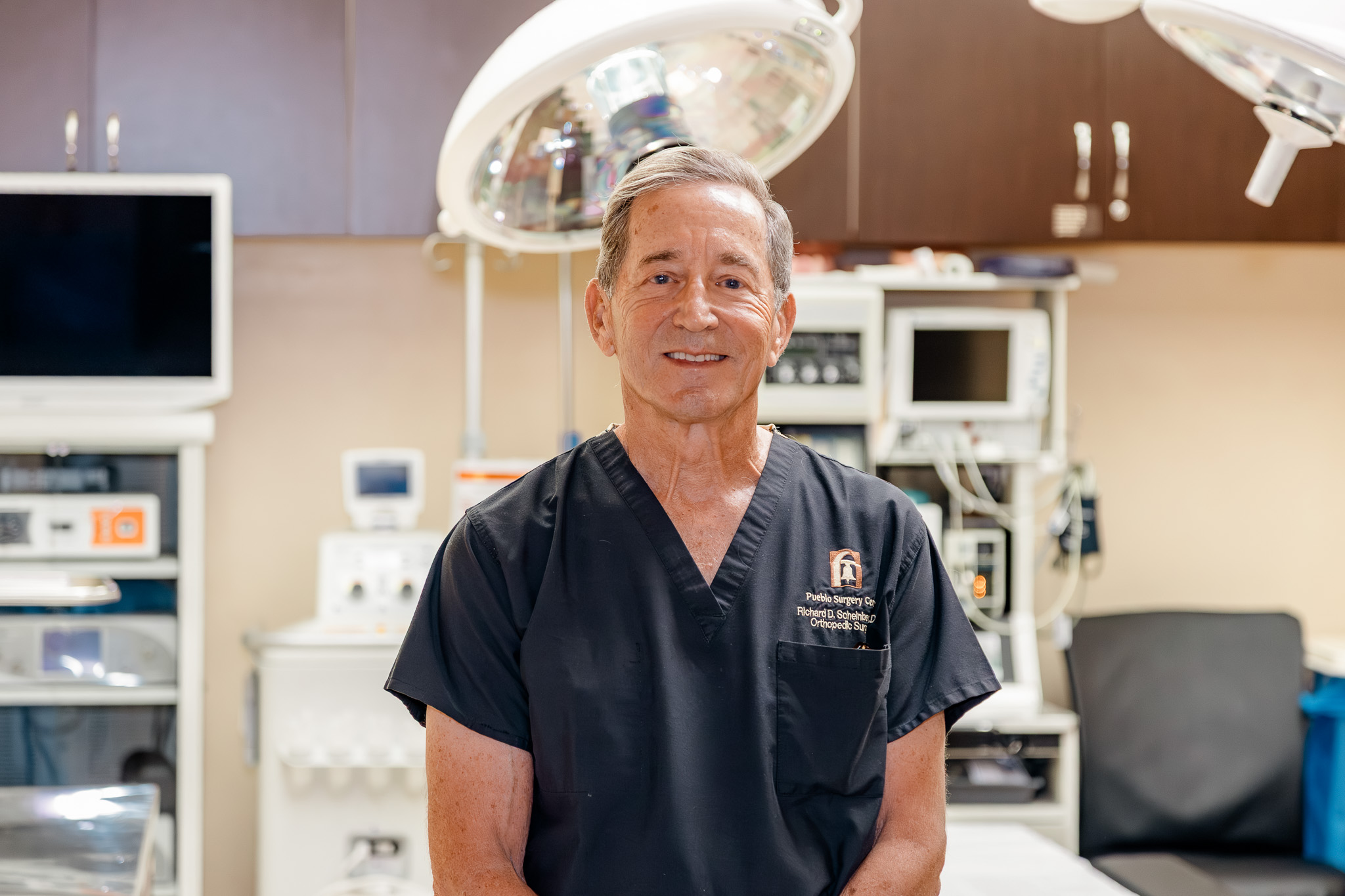
Reviewed by Dr. Richard Scheinberg, MD, a board-certified orthopedic surgeon in Santa Barbara with 40 years of surgical experience.