The short answer. Exercise, often through physical therapy, and weight loss for people who are overweight are the knee arthritis treatments that both major US guidelines support1,2. Injections range from cortisone, which gives short-term relief1, to hyaluronic acid (viscosupplementation), platelet-rich plasma (PRP) and bone marrow aspirate concentrate (BMAC). PRP is made by concentrating the platelets in a sample of the patient's own blood3. In a 2024 analysis of 48 randomized trials, PRP, BMAC and hyaluronic acid injections all outperformed cortisone for pain and function at six months or longer4. PRP is typically not covered by insurance, and a national study put it at a median of $800 per injection at top US orthopedic hospitals5. The median 90-day Medicare cost of a knee replacement was $23,800 in a national study6.
The American Academy of Orthopaedic Surgeons (AAOS) published its guideline on treating knee osteoarthritis short of knee replacement in 20211. The American College of Rheumatology (ACR) and the Arthritis Foundation published theirs in 20192. Both rate each recommendation by strength, based on the quality of the evidence1,2.
The ACR guideline says a treatment plan may combine education, exercise and other physical approaches with topical, oral and injected medicines, and that which treatments are used, and in what order, will vary from patient to patient2. The options below run from exercise and weight loss through injections, including hyaluronic acid, PRP and BMAC, to knee replacement.
The table sums up what the guidelines or published studies found for each treatment, next to the national cost figures we could find in published studies. "None found" means we did not find a published national figure; it does not mean the treatment is free. None of these figures are our practice's prices.
| Treatment | What the evidence shows | Published US cost figure |
|---|---|---|
| Exercise and physical therapy | Top rating in both guidelines [1][2] | None found |
| Weight loss, if overweight | Recommended by both guidelines, strongly by the ACR [1][2] | None found |
| Knee brace | Could be used (AAOS); strongly recommended when a support device is needed (ACR) [1][2] | None found |
| Cortisone injection | Short-term relief, up to about three months [1] | None found |
| Hyaluronic acid injection | Outperformed cortisone for pain and function at six months or longer [4] | No per-injection figure found; Medicare paid $325.02 million for these services in 2018 [7] |
| PRP injection | Ranked highest of the injections compared for pain and function at six months or longer [4] | Median $800, range $350 to $2,815 per injection [5]; mean $714 [8] |
| BMAC injection | Patients improved in pain and function starting one month after injection [9] | No BMAC figure found; US stem cell centers charged a mean of $5,156 per knee injection [10] |
| Knee replacement | More pain relief and better function at 12 months than non-surgical care alone, with more serious adverse events [11] | Median 90-day Medicare cost $23,800 [6] |
Both guidelines give exercise their top rating1,2. The ACR notes that programs tend to work better when they are supervised, often by a physical therapist2. A 2024 Cochrane review of 139 trials and 12,468 people found that exercise probably improves pain, function and quality of life in the short term12.
In a US trial of 156 patients, people who had physical therapy had less pain and disability at one year than people who had a cortisone injection13. In the same trial, physical therapy cost more at the start, but total knee-related costs over the year were about equal14.
The AAOS recommends sustained weight loss for people with knee arthritis who are overweight, and found that diet combined with exercise appears to be the preferred approach1. The ACR guideline notes that losing 5% or more of body weight can be associated with improvement, and that the benefit keeps growing with larger losses2.
In the IDEA trial of 454 older adults who were overweight or obese, the diet plus exercise group lost an average of 11.4% of body weight and, after 18 months, had less pain and better function than the diet-only or exercise-only groups15.
The AAOS says a brace could be used to improve function, pain and quality of life, and lists skin irritation and discomfort as the main downsides of trying one1. In a trial of 120 people with arthritis on the inner side of the knee, a custom-made unloader brace improved pain and function over one year compared with usual care16. The ACR recommends this type of brace strongly for people who can tolerate the inconvenience of wearing one, and notes that fitting a brace well takes expertise2.
The AAOS found that cortisone injections improve pain and function for up to about three months. As a safety point, it notes a potential risk that the injections may speed up arthritis1. The ACR recommends cortisone injections strongly, noting that trials have shown short-term benefit2.
For relief that lasts longer, a 2024 network meta-analysis of 48 randomized trials found that PRP, BMAC and hyaluronic acid injections all outperformed cortisone for pain and function at six months or more4. For more, see PRP vs. cortisone injections.
Hyaluronic acid is one of the most studied knee injections. In the 2024 network meta-analysis of 48 randomized trials, it was the injection studied most often4. That analysis found hyaluronic acid outperformed cortisone for pain and function at six months or longer, and placed it with PRP and BMAC among the treatments most likely to improve both4.
A claims study followed 1,567,024 people with knee arthritis in a large commercial insurance database over 4.5 years. Hyaluronic acid made up 3.0% of their total treatment costs, and knee replacement made up 61.5%. Among patients who went on to have a knee replacement, the jump in costs from surgery came later for those treated with hyaluronic acid (around 16 to 17 months) than for those who were not (around 5 to 6 months). The authors say this reflects a longer time before knee replacement17.
We did not find a published national price per injection. A study of Medicare Part B claims found that hyaluronic acid services rose from 1,090,503 in 2012 to 1,209,489 in 2018, and that total costs for those services rose from $290.10 million to $325.02 million7.
At our practice, physical therapy and viscosupplementation come first in the order of care, before orthobiologics are considered.
To make PRP, blood is drawn from the patient, spun in a centrifuge to concentrate the platelets, and injected3. The platelet concentration can be 5 to 10 times greater than usual, and platelets carry hundreds of proteins called growth factors that are important in the healing of injuries3.
What studies have found:
PRP is typically not covered by insurance5, and OrthoInfo notes that few plans provide even partial reimbursement3. When researchers called 100 top-ranked US orthopedic hospitals, 87 offered PRP for knee arthritis, at prices from $350 to $2,815 per injection with a median of $800. The same study found wide price differences between hospitals in the same metropolitan area5. An earlier survey of 153 US clinics found a mean of $714 for a single knee injection8. More on PRP at our practice.
At our practice, BMAC is performed at the Pueblo Surgery Center, an AAAHC-accredited outpatient facility at the same address as the office, where the marrow is drawn, processed and delivered in one visit.
What studies have found:
The review authors concluded that BMAC injections provided pain relief and functional improvement for people with knee arthritis9.
We did not find a published national price for BMAC. A survey of US centers selling stem cell treatments directly to consumers found a mean price of $5,156 for a single knee injection10. Learn more about BMAC and the combined approach.
In a trial of 100 people with moderate to severe knee arthritis who were eligible for a replacement, surgery followed by 12 weeks of non-surgical care gave more pain relief and better function at 12 months than the non-surgical care alone. The surgery group also had more serious adverse events (24 vs. 6). Most people in the non-surgical group had not had a replacement by 12 months11.
A study of 58,809 Medicare patients who had a knee replacement between 2010 and 2014 found a median cost of $23,800 for the 90 days after surgery6. See our knee replacement FAQs.
For options you pay for yourself, such as PRP or BMAC, a fair way to think about cost is to weigh it against the result you can reasonably expect for your own knee, and against what a better quality of life would mean to you. No treatment on this list comes with a guaranteed result.
Not every patient is a candidate for orthobiologics, and a proper orthopedic evaluation is essential. At our practice, candidacy is decided at a consultation before any financial commitment.
If you are in the Santa Barbara area, Dr. Scheinberg can examine your knee, review any imaging and talk through the options. See knee conditions or call (805) 682-1394.
Short answers to the questions patients ask most.
Have a question about your own situation?
Call (805) 682-1394Studies have found that PRP can improve pain and function. A 2024 network meta-analysis of 48 randomized trials ranked it highest among the knee injections compared at six months or longer4, and OrthoInfo reports that some studies have found results lasting up to 2 years3. Whether it is worth it depends on your knee and what a reasonable expected result is worth to you.
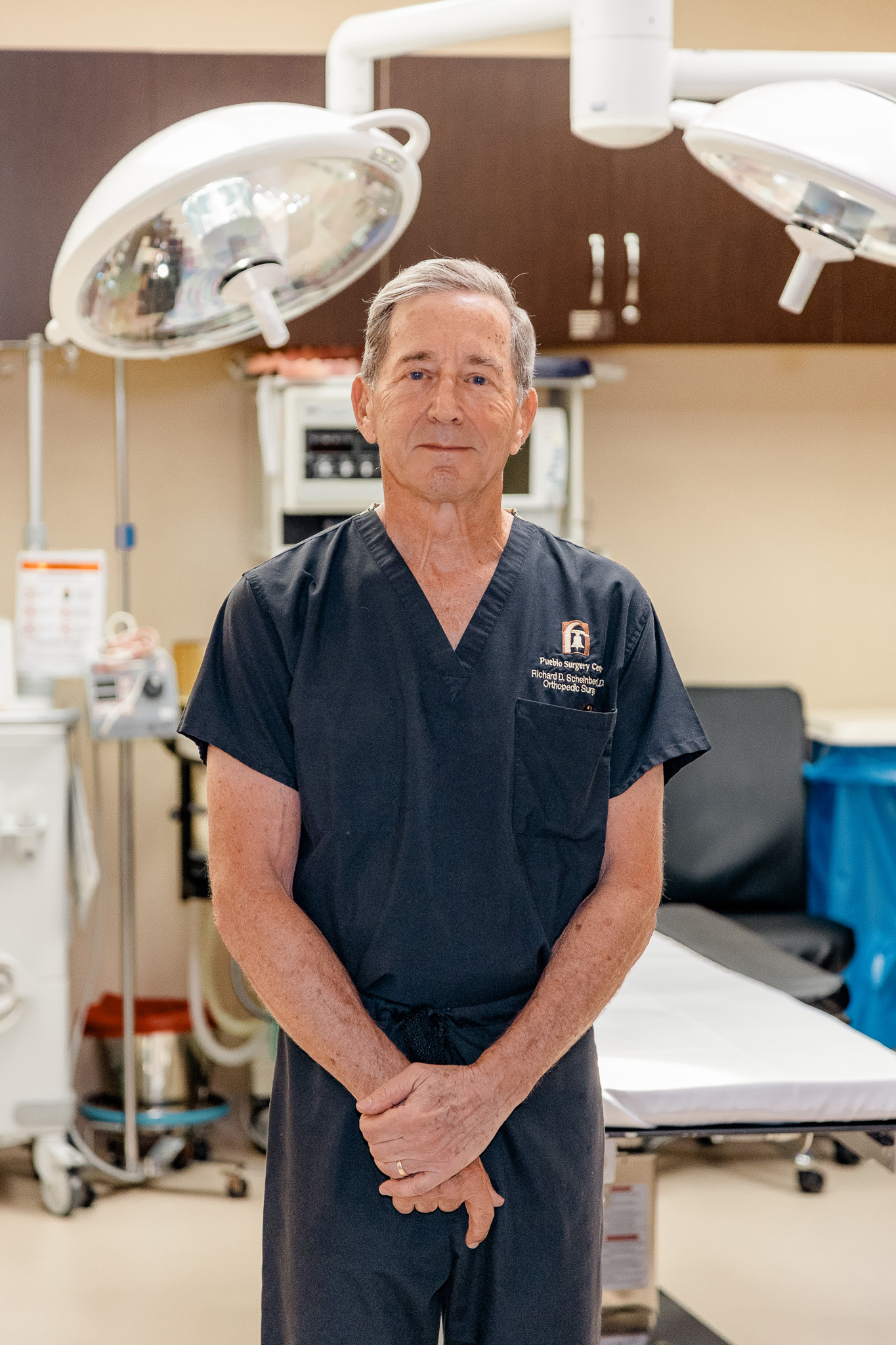
Reviewed by Dr. Richard Scheinberg, MD, a board-certified orthopedic surgeon in Santa Barbara with 40 years of surgical experience.