Regenerative Medicine for Low Back Pain in Santa Barbara: What the Evidence Shows

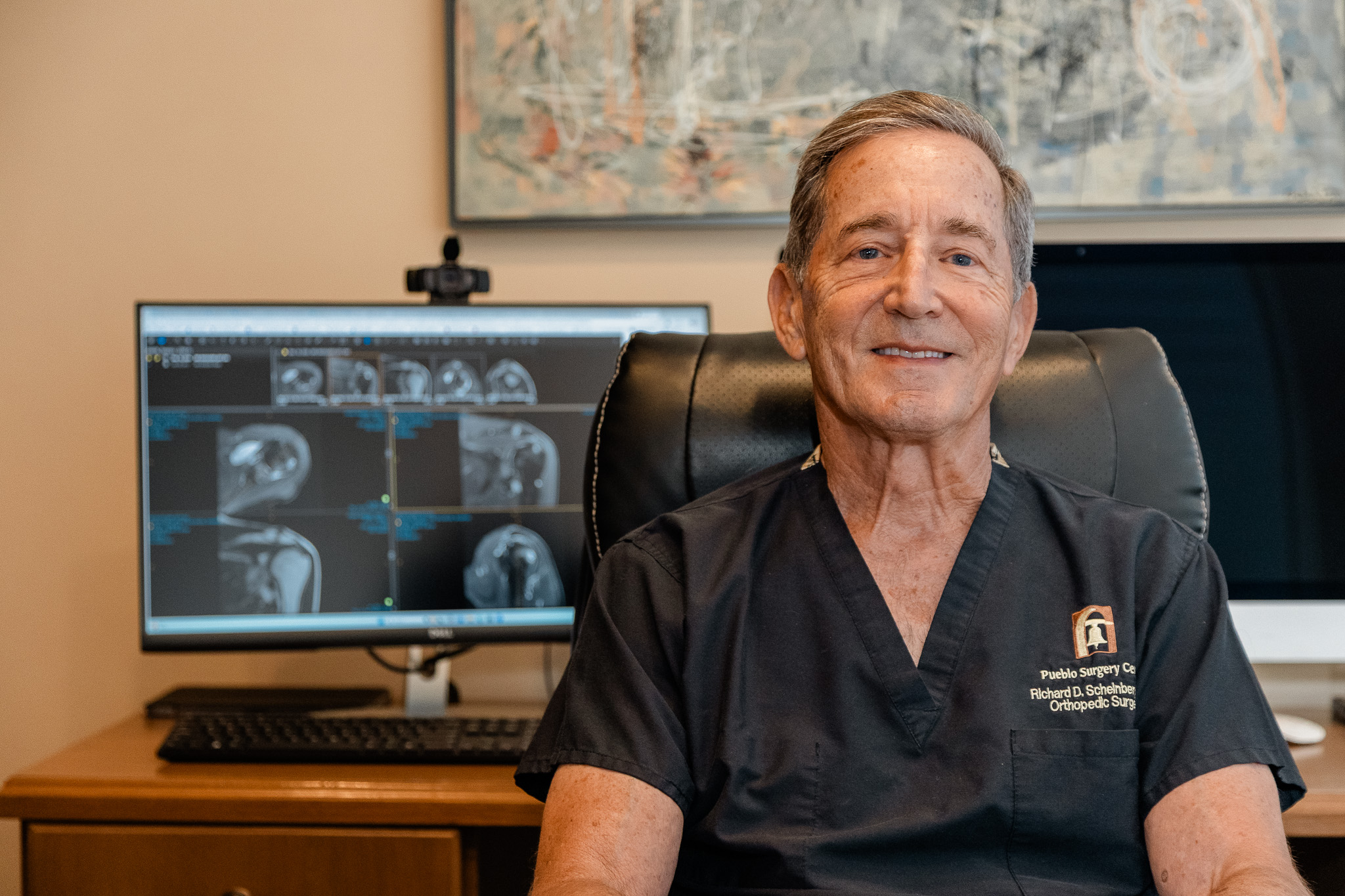
Dr. Scheinberg at his desk reviewing imaging

The short answer. Platelet-rich plasma (PRP) and bone marrow concentrate are made from your own blood or bone marrow and injected into the painful part of the spine: a disc, a facet joint or a sacroiliac (SI) joint. In studies of these injections, patients improved in pain and function1,2,3. For the facet and SI joints, a 2026 meta-analysis found PRP reduced pain more than steroid injections at 3 and 6 months4. The American College of Physicians recommends starting chronic low back pain care with exercise and other non-drug treatments5, and at our practice orthobiologics come after that conservative care.

What causes chronic low back pain?

Back pain is called chronic when it lasts longer than 12 weeks6. Several things can contribute at once, including mechanical or structural problems with the spine, inflammatory conditions and other medical conditions6. For most people with low back pain, no specific cause can be pinned down; only a small share have a well understood cause such as a fracture, cancer or an infection7.

Structures that can be involved include:

  • The discs. With age, the discs between the vertebrae wear and shrink. Small tears in the outer wall of a disc can also happen, and some people with them have no pain while others have pain lasting months or longer8. Our Spinal Discs 101 post explains how a disc is built and what goes wrong.
  • The facet joints. These are the small joints between each vertebra at the back of the spine. When discs collapse, the facet joints can rub together, and the resulting wear is a form of osteoarthritis8.
  • The sacroiliac (SI) joints. Facet and SI joint problems are common causes of chronic low back pain4.

At one academic spine center, 170 cases of stubborn low back pain were worked up with diagnostic procedures until the source was found. The disc was the source in 42%, the facet joints in 31% and the SI joint in 18%. Disc pain was more likely in younger patients, and facet or SI joint pain in older ones9.

A herniated disc pressing on a nerve can send pain down the leg, which is called sciatica8. See Herniated Disc Symptoms if that sounds like you.

What should you try first for chronic low back pain?

The American College of Physicians (ACP) 2017 guideline says that for chronic low back pain, patients and clinicians should first choose non-drug treatment. The options it lists are exercise, multidisciplinary rehabilitation, acupuncture, mindfulness-based stress reduction, tai chi, yoga, motor control exercise, progressive relaxation, electromyography biofeedback, low-level laser therapy, operant therapy, cognitive behavioral therapy and spinal manipulation5. When more is needed, the guideline's next step is medicine: anti-inflammatory drugs (NSAIDs) first, then tramadol or duloxetine. Opioids come later, and only if the potential benefits outweigh the risks for that patient, after a discussion of known risks and realistic benefits5.

Exercise is well studied. A 2021 Cochrane review of 249 trials found that exercise probably reduces chronic low back pain compared with no treatment or usual care, by an amount the authors called clinically important. In their subgroup analysis, exercise was probably more effective for pain than advice or education alone10.

At our practice, orthobiologics come after conservative care such as physical therapy has been tried. The American Academy of Orthopaedic Surgeons (AAOS) advises trying nonsurgical options for 6 months to 1 year before considering surgery for low back pain8. The two can be combined: the 2025 guideline from the American Society of Interventional Pain Physicians (ASIPP) says regenerative therapies may be used alone or alongside structured exercise, physical therapy, behavioral therapy or conventional medical management11.

What is regenerative medicine for back pain?

In this post, "regenerative medicine" means injecting a concentrate made from your own blood or bone marrow into the painful part of the spine.

  • PRP is plasma with a platelet concentration 5 to 10 times higher than usual, made by spinning a sample of your blood in a centrifuge12. Platelets contain hundreds of proteins called growth factors that are important in the healing of injuries, and laboratory studies have shown that the higher concentration of growth factors in PRP may speed up the healing process12.
  • Bone marrow concentrate (BMAC, also written BMC) is made from your own bone marrow, concentrated and then injected3. At our practice, BMAC is done at Pueblo Surgery Center, where the marrow is drawn, processed and delivered in one visit, under light anesthesia so there is no discomfort during the harvest.

PRP and bone marrow concentrate are not yet FDA approved for orthopedic conditions, including back pain13.

Do PRP or bone marrow injections into the disc help back pain?

Several studies have followed patients for months or years after a single injection into the disc. Patients improved in each of the studies below.

StudyPatientsInjected into the discFollowed forWhat it found
Tuakli-Wosornu 2016 [1]47 analyzedPRP1 yearSignificant improvements in pain, function and satisfaction over 8 weeks; function gains held through at least 1 year
Navani 2024 [2]40PRP or bone marrow concentrate12 monthsSignificant improvement in pain and function with both; no adverse effects, hospital stays or surgery
Zhang 2022 [14]31 analyzedPRP48 weeksPain and lumbar function improved; 71% of patients classed as successes
Pettine 2017 [3]26Bone marrow concentrate3 years20 of 26 did not go on to surgery and reported average improvements in pain and disability

The 2016 trial, by a team at the Hospital for Special Surgery in New York, enrolled adults who had moderate-to-severe disc pain for at least 6 months despite conservative treatment. No disc space infection, nerve injury or progressive herniation was reported after the PRP injections1.

The 2025 ASIPP guideline was written by 35 authors, and all 19 of its recommendations reached 100% agreement. It gives consensus-based recommendations for both PRP and bone marrow concentrate injected into the disc11.

Does bone marrow concentrate help degenerative disc disease?

Studies of bone marrow concentrate in the disc have reported improvements that lasted for years.

  • In a study of 26 patients who were candidates for spinal fusion or disc replacement, each received bone marrow concentrate in the disc. After 3 years, 20 of the 26 had not gone on to surgery and reported average improvements in pain and disability scores. One year after the injection, MRI showed that 40% of patients had improved by one modified Pfirrmann grade, and no patient had worsened on imaging3.
  • In the same study, patients whose concentrate held more progenitor cells tended to have significantly better clinical improvement. There were no adverse events related to the marrow draw or the injection3.
  • A 2020 systematic review of 7 studies and 97 patients, with an average follow-up of about 44 months, found that pain and disability improved after a single disc injection. The average pain score fell from 66.0 mm to 20.9 mm on a visual analog scale, and the average disability score (ODI) fell from 44.4 to 19.1, with low re-injection and complication rates15.
  • In the 2024 trial in the table, patients who received bone marrow concentrate or PRP improved in pain and function over 12 months2.

What about PRP for facet joint and SI joint pain?

For these joints, the trials compare PRP with a corticosteroid (steroid) injection, and PRP has compared favorably, especially for how long the relief lasts.

  • Facet joints. In a 46-patient trial, pain and disability improved in both the PRP group and the steroid group, and the authors described both injections as effective and safe. Success in the PRP group increased over time, and the authors concluded that PRP is a superior option for longer-lasting relief. There were no treatment-related complications in either group16. A 2026 review of 13 randomized trials found that PRP in the lumbar facet joints surpassed steroids at 6 months, and concluded that PRP provides durable mid-term benefit for lumbar facet pain17.
  • SI joint. In a 40-patient trial, pain was significantly lower with PRP than with a steroid at 6 weeks and at 3 months, and at 3 months the treatment was effective in 90% of the PRP group. Disability and health survey scores improved gradually through 3 months with PRP. The authors concluded that PRP injected into the SI joint is an effective treatment for low back pain involving that joint18.

A 2026 meta-analysis pooled 10 randomized and quasi-randomized trials of PRP versus steroids in these joints, with 392 patients. PRP reduced pain significantly more than steroids at 3 months, with consistent benefit in both the facet and SI joint groups, and the advantage persisted at 6 months4. The authors concluded that PRP may give better medium- and long-term pain reduction than steroid injections in these joints4. ASIPP also gives a consensus-based recommendation for PRP in the facet joints11.

What should you expect after an injection?

Describing a PRP injection for a tendon problem, AAOS notes that pain at the injection site may increase for the first week or two, and that it may be several weeks before the patient feels a beneficial effect12. AAOS describes the risks of PRP as minimal: there may be more pain at the injection site, and the rate of other problems, such as infection, tissue damage or nerve injury, appears to be no different from that of cortisone injections12.

In the studies above, the 2024 disc trial reported no adverse effects, hospital stays or surgery through 12 months2, the facet trial reported no treatment-related complications16, and the bone marrow study reported no adverse events from the marrow draw or the injection3. A 2026 review of randomized trials found adverse events were minimal overall17.

Who may be a candidate for regenerative treatment of the back?

ASIPP advises that these treatments be considered after a thorough diagnostic evaluation, with patients fully informed about the potential benefits, risks and costs11. Based on the guidelines above, the questions to work through include:

  • whether the pain is chronic, meaning longer than 12 weeks6, and whether exercise and other non-drug care have been tried first5
  • whether a likely pain source has been identified, such as a disc, a facet joint or the SI joint9,11
  • whether there are red-flag symptoms, such as weakness in the legs or loss of bladder or bowel control, which need medical attention right away8
  • whether you can pair the injection with a structured exercise or physical therapy program11

Not every patient is a candidate, and a proper orthopedic evaluation is essential. At our practice, candidacy is decided at a consultation before any financial commitment. Patients outside the area can have the first consultation by telemedicine, with imaging sent by email.

How much does PRP for low back pain cost?

These treatments are usually paid out of pocket11,19. AAOS notes that few insurance plans provide even partial reimbursement for PRP12, and ASIPP says most regenerative treatments for chronic low back pain are not covered by commercial insurance11.

Published US cost data for the spine are sparse20. These are national figures, not our practice's prices:

  • In a 2024 phone survey of top-ranked US orthopedic hospitals, a PRP injection for knee arthritis was quoted at $350 to $2,815, with a median of $80019.
  • A 2026 review estimated that stem cell (MSC) treatment for disc disease costs approximately $11,000 in the United States, compared with two years of epidural spinal injections at approximately $900 each, and reported better pain reduction with the regenerative approaches (66% vs. 35% to 51%). The same review put spinal fusion surgery at $79,595 to $105,657. The authors noted that cost data are sparse and may vary by region20.

The same authors describe regenerative approaches as having higher upfront costs that may offer long-lasting benefits20. The real question is whether a reasonable cost is worth the improvement you can expect. That is a conversation to have with the evidence in front of you, and no one can promise a specific outcome.

If you are in the Santa Barbara area, Dr. Scheinberg can examine your back, review any imaging and talk through the options. See spine and back care or call (805) 682-1394.

Frequently asked questions

Short answers to the questions patients ask most.

Have a question about your own situation?

Call (805) 682-1394
Is PRP effective for low back pain?

Studies have found that patients improved. In a double-blind trial, patients who received PRP in the disc showed significant improvements in pain, function and satisfaction over 8 weeks, and their function gains held for at least a year1. For the facet and SI joints, a 2026 meta-analysis found PRP reduced pain more than steroid injections at 3 and 6 months4.

What have studies found for bone marrow concentrate in the disc?

In a study of 26 patients who were candidates for spine surgery, 20 had not gone on to surgery 3 years later and reported average improvements in pain and disability3. A 2020 review of 7 studies found that pain and disability scores improved after a single disc injection, with low complication rates15.

What is the first treatment for chronic low back pain?

The ACP recommends non-drug treatment first, such as exercise, multidisciplinary rehabilitation, acupuncture or mindfulness-based stress reduction5.

Is PRP for back pain covered by insurance?

Usually not. Few plans provide even partial reimbursement for PRP12, and most regenerative treatments for chronic low back pain are not covered by commercial insurance11.

Are disc injections safe?

A 2026 review of randomized trials found adverse events were minimal overall, with one case of spinal infection after a PRP disc injection17. A separate single-arm study reported one patient who needed surgery for a disc infection two weeks after PRP14. AAOS describes the risks of PRP as minimal12.

References

  1. 1. Tuakli-Wosornu YA, Terry A, Boachie-Adjei K, et al. Lumbar intradiskal platelet-rich plasma (PRP) injections: a prospective, double-blind, randomized controlled study. PM R. 2016;8(1):1-10. PubMed
  2. 2. Navani A, Ambach M, Calodney A, et al. The safety and effectiveness of orthobiologic injections for discogenic chronic low back pain: a multicenter prospective, crossover, randomized controlled trial with 12 months follow-up. Pain Physician. 2024;27(1):E65-E77. PubMed
  3. 3. Pettine KA, Suzuki RK, Sand TT, Murphy MB. Autologous bone marrow concentrate intradiscal injection for the treatment of degenerative disc disease with three-year follow-up. Int Orthop. 2017;41(10):2097-2103. PubMed
  4. 4. Alatefi D, Alkabazi M, Alanzi A, et al. Platelet-rich plasma versus corticosteroid injections for facet and sacroiliac joint pain: a systematic review and meta-analysis with trial sequential analysis. Pain Med. 2026 (online ahead of print). doi:10.1093/pm/pnag072. PubMed
  5. 5. Qaseem A, Wilt TJ, McLean RM, et al. Noninvasive treatments for acute, subacute, and chronic low back pain: a clinical practice guideline from the American College of Physicians. Ann Intern Med. 2017;166(7):514-530. PubMed
  6. 6. National Institute of Arthritis and Musculoskeletal and Skin Diseases. Back pain. NIAMS, National Institutes of Health, last reviewed February 2023. www.niams.nih.gov
  7. 7. Hartvigsen J, Hancock MJ, Kongsted A, et al. What low back pain is and why we need to pay attention. Lancet. 2018;391(10137):2356-2367. PubMed
  8. 8. Olinger CR (contributor), Adams JE (reviewer). Low back pain. OrthoInfo, American Academy of Orthopaedic Surgeons. www.orthoinfo.org
  9. 9. DePalma MJ, Ketchum JM, Saullo T. What is the source of chronic low back pain and does age play a role? Pain Med. 2011;12(2):224-233. PubMed
  10. 10. Hayden JA, Ellis J, Ogilvie R, et al. Exercise therapy for chronic low back pain. Cochrane Database Syst Rev. 2021;9(9):CD009790. PubMed
  11. 11. Manchikanti L, Navani R, Navani A, et al. Comprehensive evidence-based guidelines for regenerative therapies in the management of chronic low back pain: 2025 update from the American Society of Interventional Pain Physicians (ASIPP). Pain Physician. 2025;28(S7):S1-S119. PubMed
  12. 12. Alaia MJ, Kelly FB (contributors). Platelet-rich plasma (PRP). OrthoInfo, American Academy of Orthopaedic Surgeons. www.orthoinfo.org
  13. 13. US Food and Drug Administration. Important patient and consumer information about regenerative medicine therapies. FDA.gov, content current as of April 8, 2024. www.fda.gov
  14. 14. Zhang J, Liu D, Gong Q, et al. Intradiscal autologous platelet-rich plasma injection for discogenic low back pain: a clinical trial. Biomed Res Int. 2022;2022:9563693. PubMed
  15. 15. Hirase T, Jack RA 2nd, Sochacki KR, et al. Systematic review: is intradiscal injection of bone marrow concentrate for lumbar disc degeneration effective? Cureus. 2020;12(7):e9045. PubMed
  16. 16. Wu J, Zhou J, Liu C, et al. A prospective study comparing platelet-rich plasma and local anesthetic (LA)/corticosteroid in intra-articular injection for the treatment of lumbar facet joint syndrome. Pain Pract. 2017;17(7):914-924. PubMed
  17. 17. Zhang RE, Aurangzeb A, Sirisena D. Platelet-rich plasma and stem cell therapies for spondylosis: a systematic review of randomized controlled trials. Eur Spine J. 2026 (online ahead of print). doi:10.1007/s00586-026-09997-9. PubMed
  18. 18. Singla V, Batra YK, Bharti N, et al. Steroid vs. platelet-rich plasma in ultrasound-guided sacroiliac joint injection for chronic low back pain. Pain Pract. 2017;17(6):782-791. PubMed
  19. 19. Tiao J, Wang K, Herrera M, et al. There is wide variation in platelet-rich plasma injection pricing: a United States nationwide study of top orthopaedic hospitals. Clin Orthop Relat Res. 2024;482(4):675-684. PubMed
  20. 20. Navani AH, Diwan SA, Beall DP, et al. Evolving treatment options for spinal pain: balancing innovation and affordability in regenerative medicine. Curr Pain Headache Rep. 2026;30(1):115. PubMed

Reviewed by Dr. Richard Scheinberg, MD, a board-certified orthopedic surgeon in Santa Barbara with 40 years of surgical experience.