What Is BMAC? A Surgeon's Guide to Bone Marrow Aspirate Concentrate

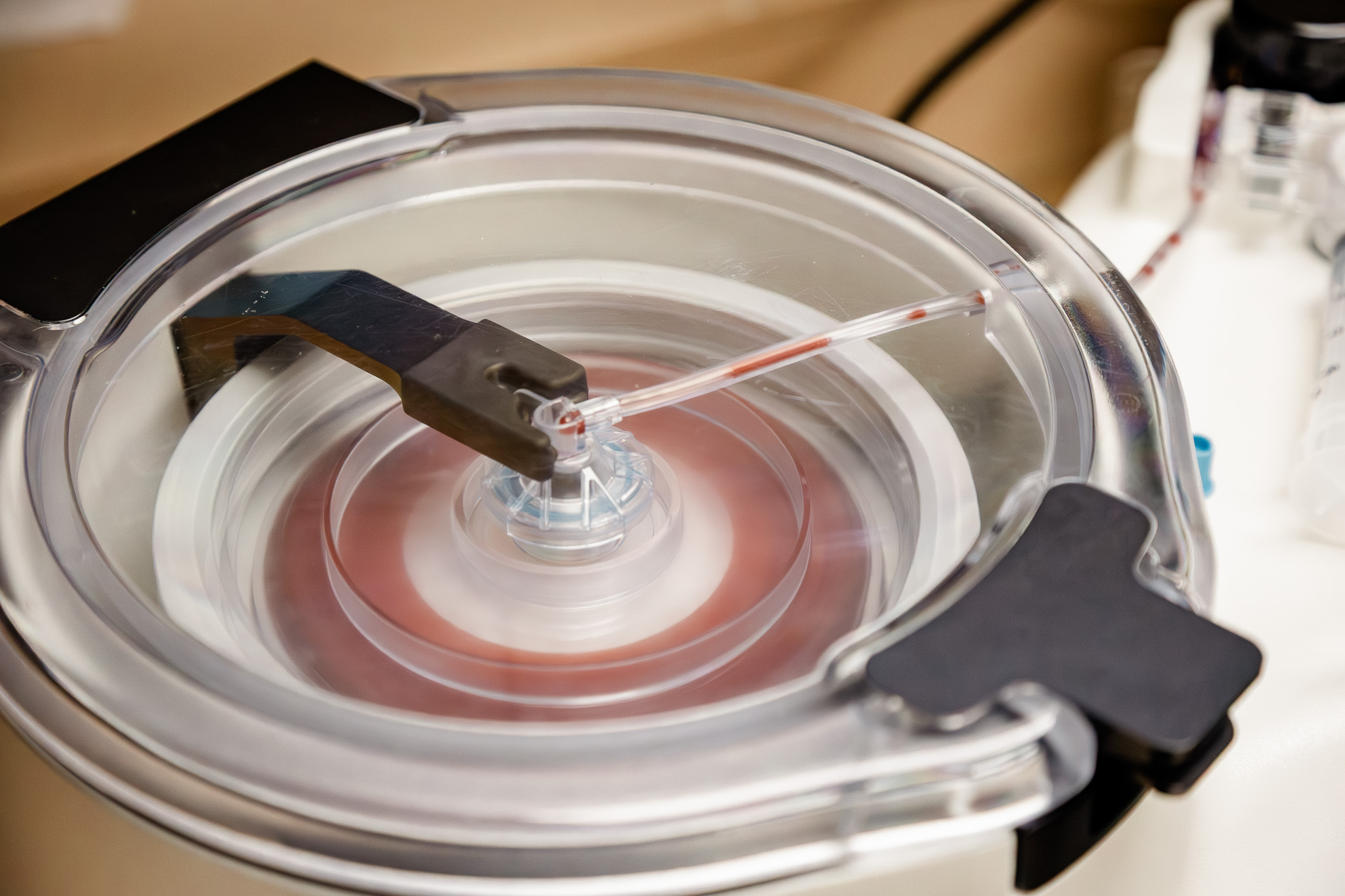
Centrifuge used to prepare a patient's own biologic concentrate

The short answer. BMAC (bone marrow aspirate concentrate) is made from a small amount of your own bone marrow, drawn from the rim of the pelvis and spun in a centrifuge to concentrate it before it is injected1,2. It contains mesenchymal stem cells along with growth factors and cytokines3. In a review of 8 randomized trials in knee arthritis, patients' pain and function improved after BMAC, starting about one month after the injection4, and studies in hip arthritis and in worn lumbar discs have also found that patients improved5,6.

What is BMAC (bone marrow aspirate concentrate)?

Bone marrow is a source of mesenchymal stem cells, along with growth factors and signaling proteins called cytokines that may help reduce inflammation and support repair of tissues such as cartilage and bone3. BMAC is that marrow after it has been concentrated. "Aspirate" describes how it is collected: the marrow is drawn out through a needle, usually from the iliac crest, the rim of the pelvis1. In research papers you will also see it called BMC (bone marrow concentrate) or cBMA (concentrated bone marrow aspirate)7,8.

Stem cells are only a small part of the mix. Mesenchymal stem cells make up roughly 0.001% to 0.01% of the nucleated cells in bone marrow3,2, which is why the marrow is concentrated and why the way it is harvested and processed matters2. The concentrate also contains progenitor cells, which laboratories can count9. In one study of disc injections, patients whose concentrate held more of these cells tended to improve more9.

A 2020 review noted that BMAC has gained recognition for cartilage conditions, including osteoarthritis, because of its potential disease-modifying and regenerative benefits3.

At our practice, BMAC is one of several orthobiologic options, alongside PRP.

Is BMAC the same as "stem cell therapy"?

BMAC is often called stem cell therapy because it contains your own mesenchymal stem cells. These cells are believed to be able to develop into several tissue types, including cartilage, bone and tendon10. Bone marrow and fat are the most abundant and accessible sources of them, and bone marrow aspirate is the source most commonly reported to stimulate healing10.

The concentrate is more than stem cells. It also carries the growth factors and cytokines found in marrow3,2. A 2025 review described BMAC as a valuable source of mesenchymal stem cells, with potential benefits in calming the inflammatory pathway involved in knee arthritis11.

BMAC and other orthobiologics are not yet FDA approved for orthopedic conditions12.

How is BMAC done?

BMAC has three steps. At our practice all three happen in one visit at Pueblo Surgery Center, a free-standing, AAAHC-accredited outpatient facility at the same address as the office, 401 Chapala Street.

  • Harvest. Marrow is drawn through a needle from the iliac crest of the pelvis1. In one study the harvest was done with the patient lying on their back, under sedation1. We use light anesthesia, so there is no discomfort during the harvest.
  • Concentration. The marrow is processed in a centrifuge to concentrate it2,8.
  • Injection. The concentrate is injected into the joint or tissue being treated1.

The details of harvest and processing matter. A 2022 review looked at how choices such as the harvest site, syringe size, anticoagulant, and centrifuge time and speed affect the number of mesenchymal cells in the final concentrate2. Because these cells are such a small share of the marrow, the review describes harvesting and processing technique as key to getting the best results2.

What does the research show for knee arthritis?

Several studies have found that people with knee arthritis improved after BMAC.

  • Pain and function improved. A 2024 systematic review of 8 randomized trials with 937 patients found that pain and function scores improved after BMAC, starting about one month after the injection. The authors concluded that BMAC injections provided pain relief and functional improvement in knee arthritis, and no serious adverse events linked to BMAC were reported4.
  • Compared with hyaluronic acid. In the same review, BMAC gave better pain scores than hyaluronic acid injections at 6 and 12 months4.
  • Compared with exercise. In a 2018 randomized trial of 48 patients, bone marrow concentrate injected with platelet products did better than exercise therapy on knee and activity scores at 3 months. After treatment, patients' scores on most outcome measures stayed improved over their starting point through two years7.
  • Advanced arthritis. For Kellgren-Lawrence grades III and IV, a 2024 study followed 37 knees for four years after BMAC. Average IKDC knee scores rose from 56 to 73, and WOMAC scores (where lower is better) fell from 40 to 18. Thirty-five of the 37 knees improved, walking distance improved, and none needed a knee replacement during that time1.
  • Reviews. A 2025 review reported that BMAC injections have shown effectiveness in clinical trials in improving function for people with knee arthritis11.

BMAC vs PRP

Both are made from your own body. PRP (platelet-rich plasma) starts with a blood draw; the blood is spun in a centrifuge to concentrate the platelets, which carry growth factors, and the result is injected13. BMAC starts with a bone marrow harvest from the pelvis, as described above, and adds the marrow's mesenchymal stem cells and cytokines3. The American Academy of Orthopaedic Surgeons' patient site notes that a growing body of research shows PRP is effective for mild to moderate knee arthritis, with some studies finding results that last up to two years13.

The two are also used together. A review of BMAC in orthopedics found published studies that combined PRP with BMAC and others that compared them in different uses10, and the 2018 knee trial above injected bone marrow concentrate together with platelet products7.

In practical terms, PRP needs only a blood draw13, while BMAC needs a marrow harvest under light anesthesia at a surgery center. The national price figures below are also lower for PRP than for stem cell injections. Our practice offers the two together as well, described on our combined approach page.

Bone marrow concentrate for degenerative disc disease and other uses

Bone marrow concentrate has also been injected into worn lumbar discs, and several studies have found that patients improved.

  • A 2020 systematic review of 7 studies with 97 patients found that after a single disc injection, average back pain scores fell from 66.0 to 20.9 on a 100 mm scale and disability scores (ODI) fell from 44.4 to 19.1, with low re-injection and complication rates6.
  • In a 2017 study, 26 patients who were candidates for spinal fusion or disc replacement surgery received bone marrow concentrate disc injections. After three years, 20 had not gone on to surgery, and their average disability scores had improved from 56.7 to 17.5 and pain scores from 82.1 to 21.9. At one year, MRI showed that 40% of patients had improved by one grade on a standard scale of disc degeneration, and none had worsened9.
  • A 2022 study of 32 adults found that one year after BMAC disc injections, back pain, disability and quality of life had all improved, and 59.4% of patients had a clinically meaningful improvement in back pain14.
  • In a 2024 multicenter randomized trial of 40 patients with chronic disc-related low back pain, patients treated with PRP or bone marrow concentrate disc injections improved significantly in pain and function. None had adverse effects, hospitalization or surgery through 12 months15.

BMAC has also been studied in other areas. A review of 36 studies covered cartilage lesions, arthritis, fractures that failed to heal and tendon injuries8. Patients treated for cartilage lesions showed significant clinical improvement, with MRI findings closer to healthy (hyaline) cartilage. Bone healing and time to union improved, and when BMAC was added to tendon repair, healing rates improved and the risk of re-rupture was lower8. A separate review described encouraging results in bone, cartilage and tendon injuries10. For hip arthritis, a 2024 review of 5 studies with 182 patients found reduced pain, better function and better quality of life in the short and middle term, with no adverse events reported5.

What are the risks?

A 2025 meta-analysis of 6 randomized trials (860 patients, 334 of whom received BMAC) found that complication rates after BMAC were not significantly different from those after other knee injections, including hyaluronic acid, PRP and steroids. Knee swelling was the most common complication, in 18.3% of BMAC patients16. A review of 48 studies of stem cell based knee injections, 1,924 patients in all, found transient side effects in 12.3%, mostly swelling and pain at the injection site, and no infections or embolisms. The authors concluded that in the short term these injections pose no risk of major complications17. In the three-year disc study, there were no adverse events related to the marrow harvest or the injection9.

How much does BMAC cost?

We do not publish prices. For a national picture:

  • Stem cell knee injections: a US study of centers marketing stem cell therapy found an average of about $5,000 per knee injection, charged to patients out of pocket18.
  • PRP: at top-ranked US orthopedic hospitals, a PRP knee injection had a median price of $800, ranging from $350 to $2,815. PRP is typically not covered by insurance19.

These are national figures from published studies, not our fees. At our practice, whether you are a candidate is decided at a consultation, before any financial commitment.

Who may be a candidate for BMAC?

Not everyone is. Most knee studies have enrolled people with mild to moderate arthritis, and the four-year study above looked specifically at advanced arthritis (grades III and IV)1. The disc studies enrolled people with chronic low back pain from a degenerated disc, and in one of them patients were already candidates for spinal fusion or disc replacement9,14.

In our order of care, physical therapy and viscosupplementation come before orthobiologics such as BMAC or PRP. Candidacy is decided at a consultation, and no injection can promise a result.

If you live in or near Santa Barbara and want to know whether BMAC makes sense for your joint, call (805) 682-1394 to book a consultation with Dr. Scheinberg.

Frequently asked questions

Short answers to the questions patients ask most.

Have a question about your own situation?

Call (805) 682-1394
Is BMAC a stem cell treatment?

BMAC contains mesenchymal stem cells, but they are a very small share of the cells in bone marrow, roughly 0.001% to 0.01%3,2. It is a concentrate of your own marrow, with other cells, growth factors and cytokines in it3.

Does BMAC help knee arthritis?

In a review of 8 randomized trials with 937 patients, pain and function improved after BMAC starting about a month after the injection, and BMAC gave better pain scores than hyaluronic acid at 6 and 12 months4. In a four-year study of advanced arthritis, 35 of 37 knees improved1.

How does BMAC compare with PRP?

Both come from your own body. PRP is made from a blood draw and concentrates platelets and their growth factors13. BMAC is made from bone marrow and also contains mesenchymal stem cells and cytokines3. Our practice offers each on its own and the two together.

Does the bone marrow harvest hurt?

At our practice the harvest is done under light anesthesia at Pueblo Surgery Center, so there is no discomfort during the harvest itself.

How much does BMAC cost?

We do not publish prices. Nationally, stem cell knee injections at US centers averaged about $5,000 per injection18. Whether you are a candidate is decided at a consultation, before any financial commitment.

References

  1. 1. Pabinger C, Lothaller H, Kobinia GS. Intra-articular injection of bone marrow aspirate concentrate (mesenchymal stem cells) in KL grade III and IV knee osteoarthritis: 4 year results of 37 knees. Sci Rep. 2024;14(1):2665. PubMed
  2. 2. Jeyaraman M, Bingi SK, Muthu S, et al. Impact of the process variables on the yield of mesenchymal stromal cells from bone marrow aspirate concentrate. Bioengineering (Basel). 2022;9(2):57. PubMed
  3. 3. Kim GB, Seo MS, Park WT, Lee GW. Bone marrow aspirate concentrate: its uses in osteoarthritis. Int J Mol Sci. 2020;21(9):3224. PubMed
  4. 4. Han JH, Jung M, Chung K, et al. Bone marrow aspirate concentrate injections for the treatment of knee osteoarthritis: a systematic review of randomized controlled trials. Orthop J Sports Med. 2024;12(12):23259671241296555. PubMed
  5. 5. Chandrashekar S, Jeyaraman M, Mounissamy P, et al. Safety and efficacy of bone-marrow aspirate concentrate in hip osteoarthritis: a systematic review of current clinical evidence. Indian J Orthop. 2024;58(7):835-844. PubMed
  6. 6. Hirase T, Jack RA 2nd, Sochacki KR, et al. Systematic review: is intradiscal injection of bone marrow concentrate for lumbar disc degeneration effective? Cureus. 2020;12(7):e9045. PubMed
  7. 7. Centeno C, Sheinkop M, Dodson E, et al. A specific protocol of autologous bone marrow concentrate and platelet products versus exercise therapy for symptomatic knee osteoarthritis: a randomized controlled trial with 2 year follow-up. J Transl Med. 2018;16(1):355. PubMed
  8. 8. Gianakos AL, Sun L, Patel JN, et al. Clinical application of concentrated bone marrow aspirate in orthopaedics: a systematic review. World J Orthop. 2017;8(6):491-506. PubMed
  9. 9. Pettine KA, Suzuki RK, Sand TT, Murphy MB. Autologous bone marrow concentrate intradiscal injection for the treatment of degenerative disc disease with three-year follow-up. Int Orthop. 2017;41(10):2097-2103. PubMed
  10. 10. Imam MA, Mahmoud SSS, Holton J, et al. A systematic review of the concept and clinical applications of bone marrow aspirate concentrate in orthopaedics. SICOT J. 2017;3:17. PubMed
  11. 11. Migliorini F, Pilone M, Ascani J, et al. Management of knee osteoarthritis using bone marrow aspirate concentrate: a systematic review. Br Med Bull. 2025;153(1):ldae016. PubMed
  12. 12. U.S. Food and Drug Administration. Important patient and consumer information about regenerative medicine therapies. Content current as of April 8, 2024. fda.gov
  13. 13. Alaia MJ, Kelly FB (contributors). Platelet-rich plasma (PRP). OrthoInfo, American Academy of Orthopaedic Surgeons. orthoinfo.org
  14. 14. Haines CM, Bhatt FR, Orosz LD, et al. Low back pain, disability, and quality of life one year following intradiscal injection of autologous bone marrow aspirate concentrate. Stem Cells Int. 2022;2022:9617511. PubMed
  15. 15. Navani A, Ambach M, Calodney A, et al. The safety and effectiveness of orthobiologic injections for discogenic chronic low back pain: a multicenter prospective, crossover, randomized controlled trial with 12 months follow-up. Pain Physician. 2024;27(1):E65-E77. PubMed
  16. 16. Fucaloro S, Bragg JT, Feldman MW, et al. Complication rates of bone marrow aspirate concentrate injections versus other injectable therapies for knee osteoarthritis: a systematic review and meta-analysis. J Orthop. 2025;62:36-42. PubMed
  17. 17. Riggle C, McLellan M, Bohlen H, Wang D. Complications of stem cell-based injections for knee osteoarthritis: a systematic review. HSS J. 2025;21(4):476-484. PubMed
  18. 18. Piuzzi NS, Ng M, Chughtai M, et al. The stem-cell market for the treatment of knee osteoarthritis: a patient perspective. J Knee Surg. 2018;31(6):551-556. PubMed
  19. 19. Tiao J, Wang K, Herrera M, et al. There is wide variation in platelet-rich plasma injection pricing: a United States nationwide study of top orthopaedic hospitals. Clin Orthop Relat Res. 2024;482(4):675-684. PubMed

Reviewed by Dr. Richard Scheinberg, MD, a board-certified orthopedic surgeon in Santa Barbara with 40 years of surgical experience.