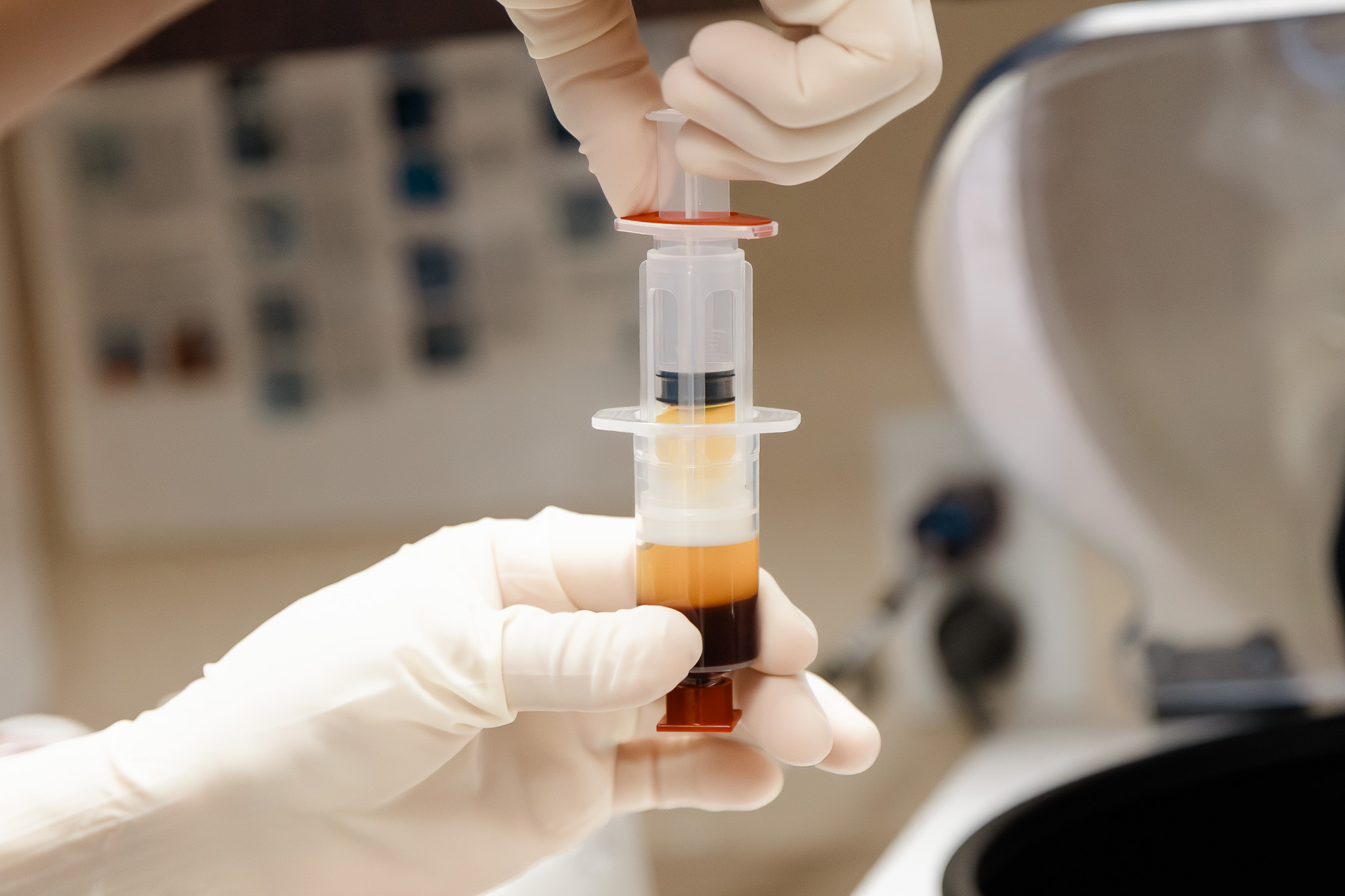
The short answer. Platelet-rich plasma (PRP) is a concentrate made from your own blood, with a platelet concentration that can be 5 to 10 times higher than usual, injected into a painful joint or tendon1. AAOS says it does appear to be effective for certain chronic tendon injuries, such as tennis elbow, and for low- to moderate-grade knee osteoarthritis1. How well it works can depend on the area being treated and on how the PRP is prepared1.
Blood is mostly a liquid called plasma, with red cells, white cells and platelets suspended in it. Platelets are best known for clotting. They also contain hundreds of proteins called growth factors that are important in the healing of injuries1.
PRP is plasma with many more platelets than blood normally carries. The concentration of platelets, and with it the concentration of growth factors, can be 5 to 10 times greater than usual1.
The American Academy of Orthopaedic Surgeons (AAOS) says it is not exactly clear how PRP works. Laboratory studies suggest that the higher concentration of growth factors may speed up healing1.
Blood is drawn from the patient and spun in a centrifuge, which separates the platelets from the other blood cells and concentrates them. The platelets are then injected into the injured area1. For a tendon problem, the PRP may be mixed with a local anesthetic before it is injected1.
PRP can also be used during some surgeries. For that, it is prepared in a special way that allows it to be stitched into torn tissue1.
Not all PRP is the same. It can be made with different commercial kits, and laboratory studies show the kits produce different products:
Leukocytes are white blood cells. AAOS defines leukocyte-rich PRP as having a white cell count above that of whole blood, and leukocyte-poor PRP as having a count below it1. Which one is preferred seems to depend on what is being treated.
For knee arthritis, a network meta-analysis of 23 studies and 2,260 patients compared the two types and found similar results for pain, function and local reactions, with leukocyte-poor PRP ranking higher4. A separate review of 32 studies found that leukocyte-rich PRP caused more injection-site pain and swelling5. In the pooled trials comparing PRP with hyaluronic acid, leukocyte-poor PRP was linked with better scores on a knee function questionnaire than leukocyte-rich PRP6.
For tendons, leukocyte-rich PRP has looked better. A meta-analysis of 18 tendinopathy trials with 1,066 participants found the most significant results in groups given leukocyte-rich preparations, and its authors concluded there is good evidence for a single ultrasound-guided injection of leukocyte-rich PRP7. For tennis elbow, a review of 11 trials found better results with leukocyte-rich than with leukocyte-poor PRP8.
AAOS says a growing body of research shows PRP is effective for low- to moderate-grade knee osteoarthritis, and that some studies have shown results lasting up to two years1.
Against hyaluronic acid (the "gel" injection), PRP has come out ahead in pooled trials. A meta-analysis of 18 randomized trials, with 811 patients given PRP and 797 given hyaluronic acid, found a mean improvement in WOMAC scores (a standard arthritis pain and function questionnaire) of 44.7% with PRP versus 12.6% with hyaluronic acid6.
A review of 32 knee studies found that patients improved in both pain and function after PRP, by amounts the authors rated as clinically important, for up to 12 months of follow-up. Both leukocyte-rich and leukocyte-poor PRP produced these gains5.
How many injections? A review of five trials with 301 patients found that at six months, pain improved by a similar amount after one injection as after two or three, and three injections did better for knee function9.
For a side-by-side look at steroid shots, see PRP vs cortisone injections.
AAOS reports that recent research has shown certain tendon problems can have improved outcomes with PRP injections1.
PRP has also been used to treat professional athletes for common sports injuries such as pulled hamstring muscles and knee sprains1. For muscle injuries, see our torn hamstring guide.
AAOS describes the risks as minimal. The main one is increased pain at the injection site. The rates of infection, tissue damage and nerve injury appear no different from those of cortisone injections1.
The treated area can feel worse at first. Pain at the injection site may increase for the first week or two, and it may be several weeks before you notice a benefit1. In knee studies, leukocyte-rich PRP was more likely than leukocyte-poor PRP to cause pain and swelling after the injection5.
PRP is usually paid out of pocket. AAOS notes that few insurance plans, including workers' compensation plans, provide even partial reimbursement1, and a 2024 national study states that PRP is typically not covered by insurance11.
National figures (these are not our practice's prices):
The same 2024 study found wide price differences even within a single metropolitan area11. When you weigh the cost, weigh it against the result you can reasonably expect for your own joint, which a consultation can help you judge. No injection can promise an outcome.
AAOS lists several factors that affect how well PRP works: the part of the body being treated, your overall health, whether the injury is recent or long-standing, and how the PRP was prepared1.
At our practice, physical therapy and viscosupplementation come first. When they have not worked, PRP, BMAC or the two combined may be considered. Not every patient is a candidate, and a proper orthopedic evaluation is essential. Candidacy is decided at a consultation, before any financial commitment.
If you are in the Santa Barbara area, Dr. Scheinberg can examine the joint, review any imaging and talk through the options. Learn more about PRP at our practice or call (805) 682-1394.
Short answers to the questions patients ask most.
Have a question about your own situation?
Call (805) 682-1394It may be several weeks before you feel a benefit, and pain at the injection site can increase for the first week or two1.
Studies have tested one, two and three injections. In a review of five knee trials, pain improved by a similar amount with one injection as with two or three at six months, while three injections did better for function9.
Reviewed by Dr. Richard Scheinberg, MD, a board-certified orthopedic surgeon in Santa Barbara with 40 years of surgical experience.