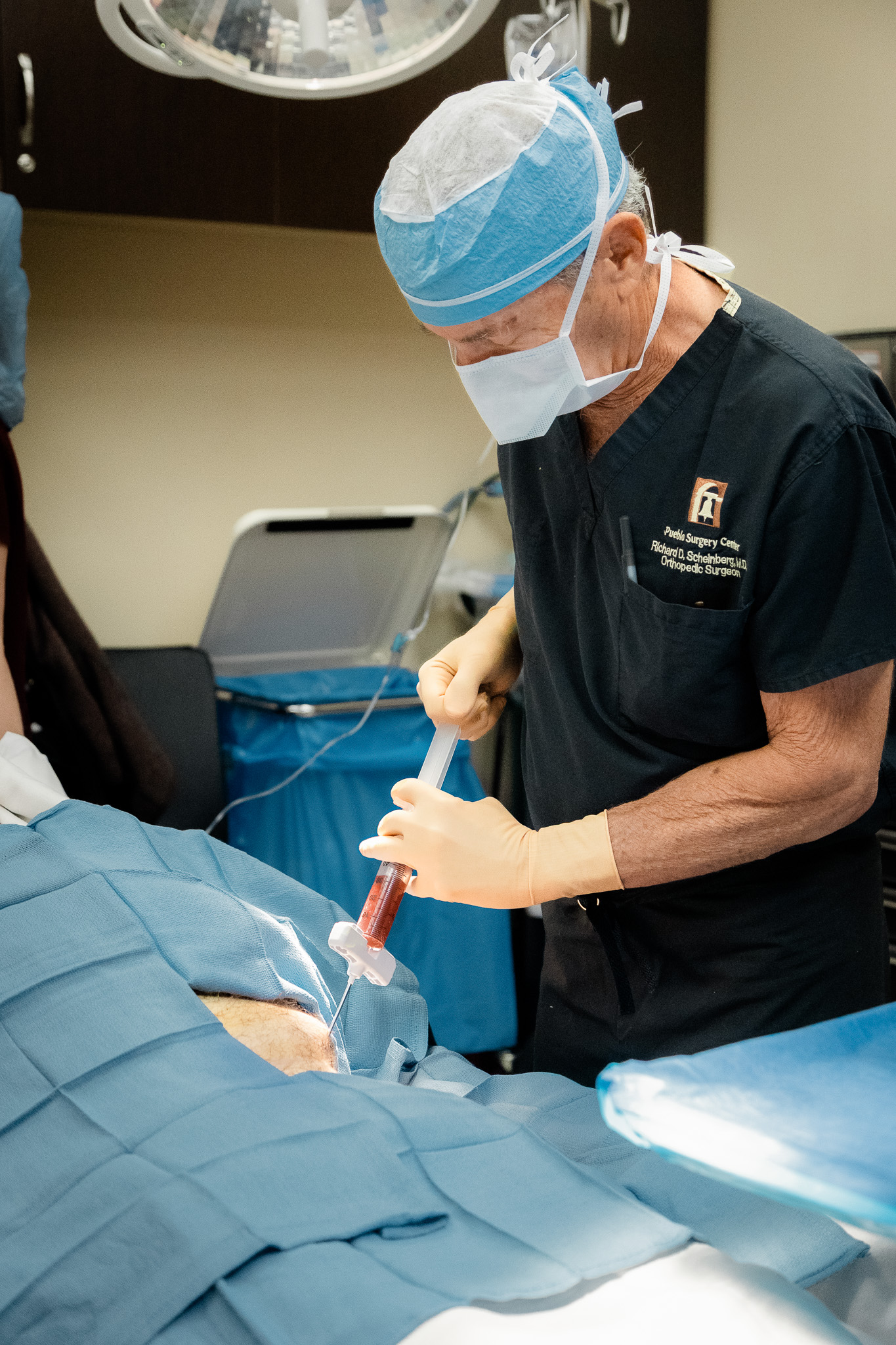
The short answer. Platelet-rich plasma (PRP) is a concentrate of platelets made from your own blood and injected into the injured part of the shoulder1. For rotator cuff tendinopathy and partial tears, a 2021 meta-analysis of 9 trials found PRP improved pain and function at about 6 months2. Compared with cortisone, pooled trials found PRP gave better pain relief and shoulder function at 6 months, with fewer side effects3, and for frozen shoulder, better pain, range of motion and function at 3 and 6 months4. Used during rotator cuff repair surgery, PRP has lowered the retear rate in several analyses5,6.
The American Academy of Orthopaedic Surgeons (AAOS) groups most shoulder problems into four categories: tendon inflammation or tears, instability, arthritis and fractures7. This post looks at three causes:
For more on the rotator cuff specifically, see Rotator Cuff Injuries: Surgery or Stem Cell Therapy?.
PRP is plasma with a platelet concentration 5 to 10 times higher than usual. It is made by drawing your blood and spinning it in a centrifuge, and the concentrated platelets are then injected into the injured area1. Platelets contain hundreds of proteins called growth factors that are important in the healing of injuries, and laboratory studies have shown that the higher concentration of growth factors in PRP may speed up the healing process1. AAOS also notes that recent research has shown improved outcomes with PRP injections for certain tendon problems1.
In the AAOS example of a tendon injection, pain at the injection site may increase for the first week or two, and it may be several weeks before the patient feels a benefit1. AAOS describes the risks as minimal: mainly more pain at the injection site, with rates of infection, tissue damage and nerve injury that appear no different from cortisone injections1. Learn more about PRP at our practice.
Pooled analyses of randomized trials have found that patients improved with PRP, with the clearest gains at around 6 months.
Nonsurgical treatment such as rest, activity changes and physical therapy relieves pain and improves function in about 80 to 85% of patients with a rotator cuff tear, according to AAOS8. PRP can be combined with a rehabilitation program, and in the 2021 analysis, pain relief was significant in groups that did rehabilitation after the injection2.
Three reviews of randomized trials comparing the two point the same way: cortisone works in the short term, and PRP's advantage shows up later and lasts longer.
| Review | Trials pooled | What it found |
|---|---|---|
| Lin 2019, rotator cuff tendinopathy | 18 trials of several injections | Cortisone helped in the short term (3 to 6 weeks); PRP may give better long-term results, beyond 24 weeks [12] |
| Peng 2023, rotator cuff disease | 9 trials, 469 patients | Recovery of shoulder scores (SST and ASES) was significantly better with PRP than with cortisone in the long term [13] |
| Yuwarungsikul 2026, tendinopathy and partial tears | 10 trials, 591 patients | At 6 months, PRP improved pain and shoulder function scores more than cortisone, with fewer side effects [3] |
In the 2026 review, PRP improved the ASES score by an average of 10.8 points and the Constant-Murley score by 10.7 points more than cortisone at 6 months, and side effects were less common with PRP. The authors concluded that PRP may be a more durable treatment option for rotator cuff tendinopathy3.
For context, AAOS says a cortisone injection for a rotator cuff tear relieves pain in about two-thirds of patients for at least 3 months, and that repeated long-term injections carry risks worth discussing8. Our post on PRP vs cortisone covers the comparison across other joints.
Physical therapy focused on flexibility is the main treatment for frozen shoulder, and AAOS also lists anti-inflammatory medicines, steroid injections and hydrodilatation (stretching the capsule by injecting a large volume of sterile fluid)9.
For PRP, a 2026 meta-analysis of 7 randomized trials with 692 patients compared it with steroid injections. At 3 and 6 months, PRP did better for pain, range of motion and function4. At 3 months, patients who had PRP gained on average about 17 degrees more abduction (raising the arm out to the side) and about 12 degrees more external rotation than those who had a steroid. The authors judged the improvements at 6 months highly likely to be clinically significant compared with steroids, and complications were rare in both groups (0.86% with PRP and 0.87% with steroids)4.
A 2025 systematic review of injections for arthritis of the ball-and-socket (glenohumeral) shoulder joint, covering 1,125 patients, concluded that injections can provide symptomatic relief. It lists hyaluronic acid, corticosteroids, PRP, bone marrow aspirate concentrate (BMAC) and stem cells among the injectable therapies that have emerged as potential options for managing pain and improving joint function14.
AAOS notes that steroid injections can sharply reduce arthritis inflammation and pain10.
Surgeons also add PRP at the time of rotator cuff repair, and studies of PRP during repair have found fewer retears.
In short, studies have found that PRP during repair may reduce the chance of a retear.
AAOS says the best rotator cuff treatment differs from person to person, and depends on age, activity level, general health and the type of tear8. It lists signs that surgery may be a better option, including symptoms lasting 6 to 12 months, a large tear (more than 3 cm) with good surrounding tissue, significant weakness, or a tear from a recent injury8.
At our practice, physical therapy and viscosupplementation come first. PRP, BMAC or the two combined may be considered when those have not worked. Not every patient is a candidate, a proper orthopedic evaluation is essential, and candidacy is decided at a consultation before any financial commitment. Patients outside the area can have the first consultation by telemedicine, with imaging sent by email.
PRP is usually paid out of pocket. A 2024 national study states that PRP is typically not covered by insurance15, and AAOS notes that few insurance plans provide even partial reimbursement1.
These national figures give a sense of range. They are not our practice's prices:
Weigh a reasonable cost against the improvement you can expect. No one can promise a specific outcome.
If you are in the Santa Barbara area, Dr. Scheinberg can examine your shoulder, review any imaging and talk through the options. See shoulder care or call (805) 682-1394.
Short answers to the questions patients ask most.
Have a question about your own situation?
Call (805) 682-1394Reviewed by Dr. Richard Scheinberg, MD, a board-certified orthopedic surgeon in Santa Barbara with 40 years of surgical experience.