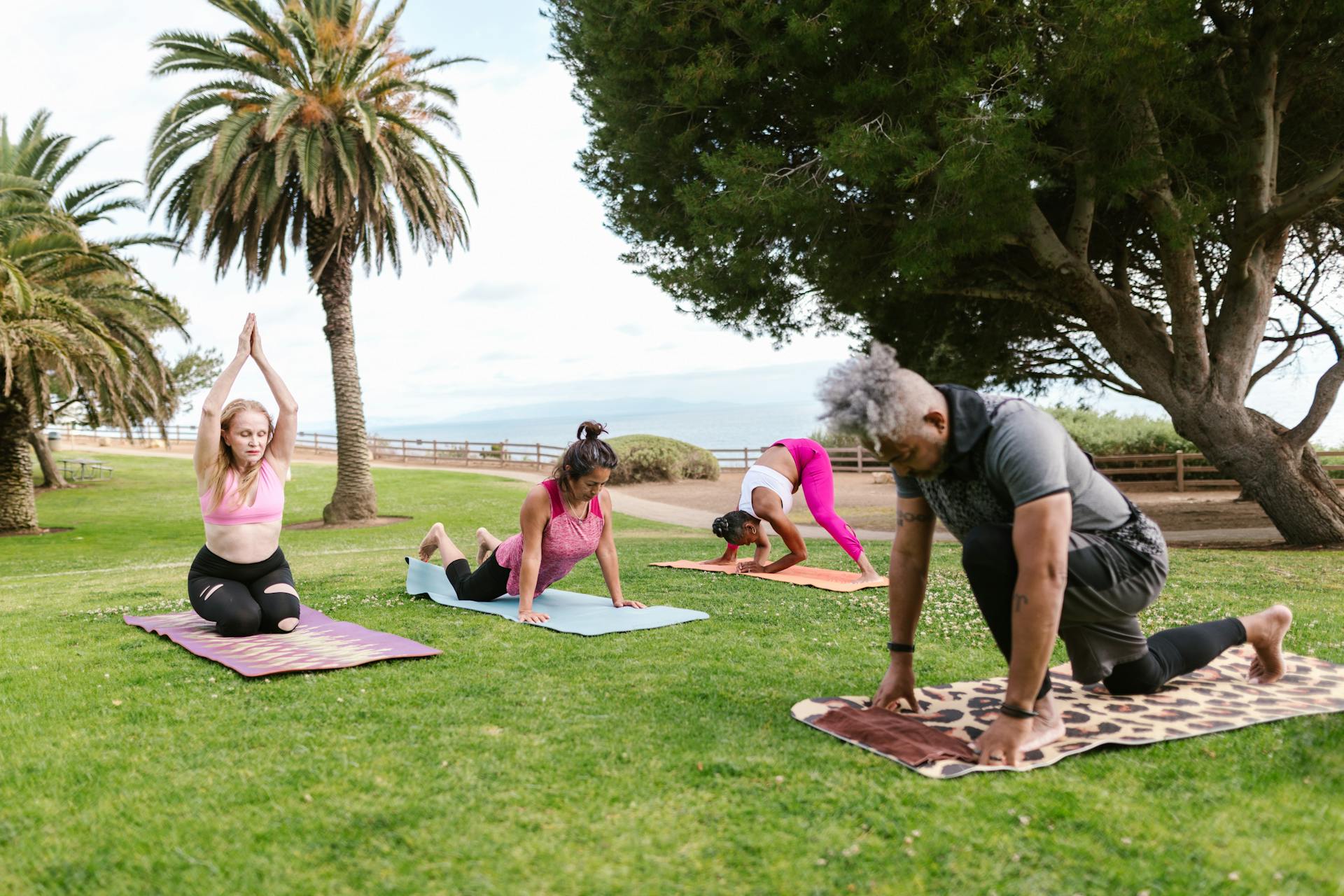
The short answer. The habits with good evidence behind them for healthy joints are keeping a healthy weight, staying active, keeping the thigh muscles strong and avoiding joint injuries1,2,3,4. The American College of Rheumatology and Arthritis Foundation guideline strongly recommends exercise for osteoarthritis, and weight loss for people with knee or hip osteoarthritis who are overweight1.
Most joint advice is really about osteoarthritis, the most common type of arthritis5. In osteoarthritis, the cartilage and other tissues in a joint break down or change in structure over time5. The National Institute of Arthritis and Musculoskeletal and Skin Diseases (NIAMS) points out that this does not happen because of simple wear and tear; changes in the tissue trigger the breakdown, usually gradually5. More than 32 million US adults have osteoarthritis6.
NIAMS lists these risk factors5:
Women are more likely than men to develop it, especially after 505. Age and family history are fixed. Weight, strength and injury risk are the parts you can work on.
Yes, and the effect is larger than the number on the scale suggests. In a study of 142 older adults with knee osteoarthritis, each pound of weight lost took about 4 pounds of load off the knee with every step2. Over thousands of steps a day, that adds up2.
Weight loss may also lower the chance of developing knee arthritis in the first place. In the Framingham Study, women who lost about 11 pounds (2 points of body mass index) over 10 years cut their odds of developing symptomatic knee osteoarthritis by more than half7.
For people who already have knee or hip osteoarthritis and are overweight, the 2019 American College of Rheumatology (ACR) and Arthritis Foundation guideline strongly recommends weight loss1. Losing at least 5% of body weight can make a difference, benefits keep growing with larger losses, and weight loss works better when combined with exercise1. A meta-analysis of randomized trials likewise found that disability improved once weight loss passed about 5%8.
Yes. The ACR guideline strongly recommends exercise for osteoarthritis of the knee, hip and hand, and says the vast majority of people with osteoarthritis can take part in and benefit from some form of it1. Walking was the most commonly studied exercise, and trials also used stationary cycling, strength training and water exercise, which works joints in a low-impact setting1. The guideline also strongly recommends tai chi for knee and hip osteoarthritis1.
The guideline advises choosing a form of exercise based on a person's preferences and access1. In practice, that means one you will keep doing. For adults in general, federal guidelines call for at least 150 minutes a week of moderate activity plus muscle-strengthening work at least twice a week9.
Pain is a common reason people stop. The ACR panel noted there is no agreed level of pain at which a person should or should not exercise, and that trials showing benefit included people who had pain1. If a joint already hurts, plan the program with your doctor or a physical therapist. See our physical therapy page.
For recreational runners, the evidence says probably not. A meta-analysis of 17 studies and more than 114,000 people found hip or knee osteoarthritis in 3.5% of recreational runners, compared with 13.3% of competitive runners and 10.2% of people who did not run10. The authors concluded that both a sedentary lifestyle and long exposure to high-volume or high-intensity running were linked to arthritis, and they could not tell whether running caused it or whether other factors, such as past injuries, explained the link10.
The quadriceps are the muscles on the front of the thigh that straighten the knee. A 2022 meta-analysis of 11 studies and 46,819 people found that weak quadriceps were linked with about 85% higher odds of developing painful knee osteoarthritis in women and 43% higher odds in men3. The authors concluded that building quadriceps strength may help prevent knee osteoarthritis3.
Weakness can also feed on itself. NIAMS describes a cycle in which joint pain makes people less active, the muscles weaken, and weaker muscles put more stress on the joint5.
Knee injury is one of the few risk factors for knee arthritis that can be prevented4. In a meta-analysis of 24 studies and 20,997 people, a history of knee injury was linked to about four times the odds of knee osteoarthritis4. The odds were higher still after specific injuries such as ligament or tendon tears, meniscus damage and fractures around the knee4. NIAMS notes that when younger people develop osteoarthritis, it is usually because of a joint injury, an abnormal joint structure or a genetic defect in the cartilage5.
Injury prevention training. Neuromuscular training programs, built around landing technique and leg strength, reduce anterior cruciate ligament (ACL) tears:
See our sports injury care page if an injury has already happened.
Protective gear. In a study of injured in-line skaters, those who did not wear wrist guards had about 10 times the odds of a wrist injury, and those without elbow pads about 9 times the odds of an elbow injury13. For snowboarding, a systematic review concluded that wrist guards may help prevent wrist injuries14.
The available research says no. In a study of 215 people aged 50 to 89, hand osteoarthritis was about as common in people who habitually cracked their knuckles (18.1%) as in those who did not (21.5%), and years of cracking were not linked to arthritis in the cracked joints15.
Common signs of osteoarthritis include pain when you use the joint, stiffness that lasts less than 30 minutes after waking or resting, swelling after activity, and a feeling that the joint is loose or unstable5. In later stages, the pain may be worse at night5.
If you are in the Santa Barbara area, Dr. Scheinberg can examine the joint, review any imaging and talk through the options. See joint preservation or call (805) 682-1394.
Short answers to the questions patients ask most.
Have a question about your own situation?
Call (805) 682-1394The evidence does not point that way for recreational runners. In a large meta-analysis, recreational runners had less hip and knee arthritis (3.5%) than non-runners (10.2%) or competitive runners (13.3%)10.
The ACR guideline strongly recommends tai chi for people with knee or hip osteoarthritis1. Tai chi combines slow, gentle movements with deep breathing and relaxation, and the guideline suggests its benefit may reflect its effects on strength, balance and fall prevention, as well as on depression and self-confidence1.
One study found no link: people who habitually cracked their knuckles had about the same rate of hand arthritis as people who did not15.
Reviewed by Dr. Richard Scheinberg, MD, a board-certified orthopedic surgeon in Santa Barbara with 40 years of surgical experience.